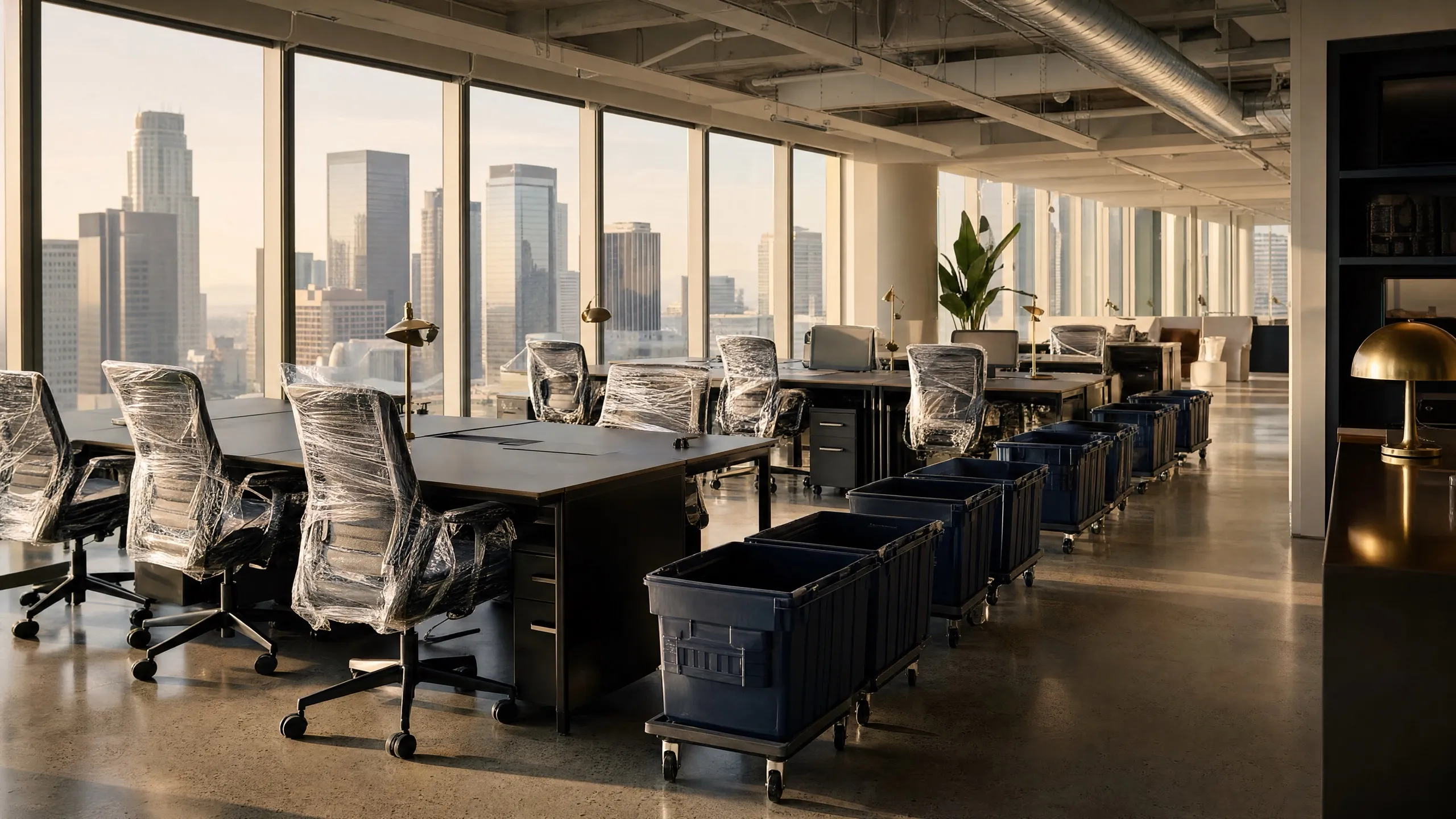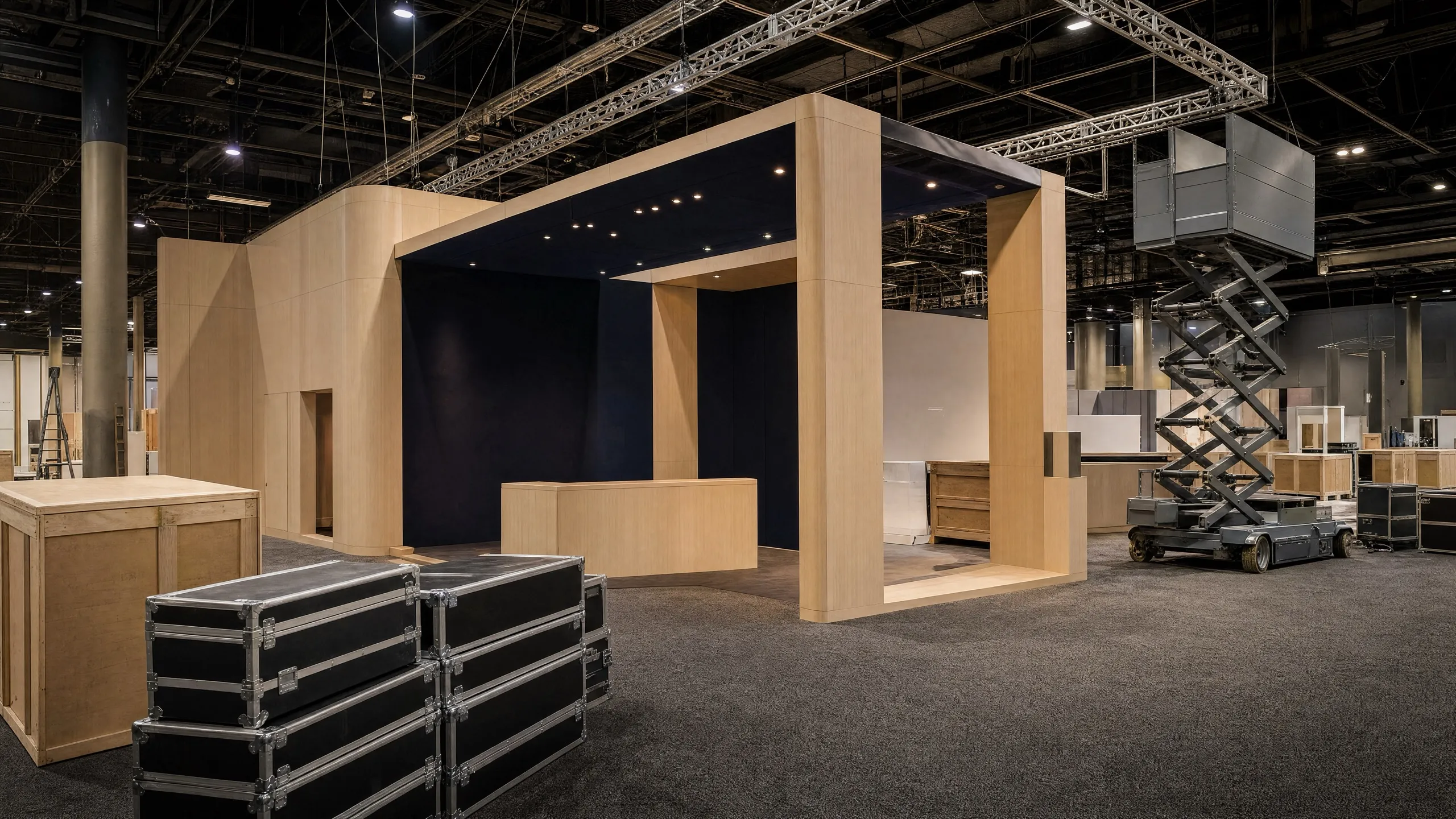
Trade show logistics for Southern California exhibitors
A trade show booth spends most of its life in a truck or in storage. The few days on the show floor depend on everything around them: crates packed and labeled to the show’s rules, freight at the right address inside the right window, and a plan for getting everything home before the hall closes.
Elite Moving & Storage handles trade show logistics for exhibitors at the major Southern California venues: the Los Angeles Convention Center downtown, with its South and West Halls; the Anaheim Convention Center next to the Disneyland Resort; the Long Beach Convention and Entertainment Center; and the Pasadena Convention Center. We work for exhibit managers, marketing teams and agencies who want one accountable partner between their office or warehouse and the booth.
Trade show shipping: advance warehouse or direct to show site
Most shows give exhibitors two ways to get freight onto the floor, and the exhibitor kit spells out both.
- Advance warehouse. The show’s official general contractor runs a warehouse that accepts freight ahead of the show, often opening about a month before move-in and closing a few days before it. Freight is held there and delivered to your booth space before your team arrives. It takes a late truck out of the equation, and material handling is usually priced higher for warehouse freight to cover the extra storage and handling.
- Direct to show site. Freight arrives at the venue during your targeted move-in window. There is no warehouse storage, but timing matters: a truck that arrives outside its window can be held in the marshaling yard until a slot opens, at a cost in time and sometimes in fees.
The right choice depends on the size of the exhibit, how far it travels and how much room the schedule has. For a local exhibitor with a crated or cased booth, kept at an office in Pasadena or a warehouse in Orange County, direct delivery on a planned schedule is often the simplest route. For exhibits coming from farther away, or for teams that cannot risk a late arrival, the advance warehouse buys certainty. We weigh the two against the kit and your budget before anything ships.
Targeted move-in, marshaling yards and material handling
Large shows control dock traffic tightly. Show management assigns each exhibitor a targeted move-in date and time, usually by booth location or size. Trucks delivering direct check in at a marshaling yard, a staging lot away from the docks, and are dispatched to the building in turn. The driver needs the exhibitor name, booth number and shipping paperwork to clear check-in.
Once freight reaches the dock, the official contractor moves it to the booth. This is material handling, still widely called drayage, and the general contractor bills it to the exhibitor separately from the shipping charge. It is usually priced per hundredweight (100 pounds) with a minimum, and it covers unloading, delivery to the booth, storing your empty crates during the show, bringing them back at close and returning the packed freight to the dock for the outbound carrier. Pad-wrapped or loose freight is often billed at a higher special-handling rate, and overtime rates apply outside regular hours. That is one reason crated freight delivered inside its window tends to cost less to handle.
Exhibit shipping and transportation services
Trade show freight is not ordinary freight. Booth components, large-format graphics, monitors, product samples and furniture arrive in better condition when they are packed and handled by people who move fragile, valuable things for a living.
- Packing and crating. Components travel in crates or road cases, and we can build custom crates to size for fragile pieces such as monitors, glass shelving and lightboxes.
- Labeling to the kit. Every piece is labeled with the show, the exhibitor, the booth number and the piece count, the way the contractor’s shipping instructions ask.
- Dedicated transport. Local shipments go on a dedicated truck from your office or warehouse straight to the venue, rather than through a freight terminal where they would be unloaded and handled again.
- Clean paperwork. Bills of lading and piece counts that match what is on the truck, so the contractor can sign for everything on arrival.
At close, the process runs in reverse. Before the show ends, the exhibitor files an outbound material handling agreement that names the carrier and the delivery address. Empty crates come back once the aisles are cleared, the booth is packed, and the carrier has to check in by the show’s deadline. If it misses that deadline, the general contractor typically ships the freight with its own carrier or sends it to its warehouse, at the exhibitor’s expense. Booking the outbound pickup early and confirming it the day before closing is the simplest protection.
Exhibition stand installation and dismantle
Some exhibitors want a single partner from their warehouse to a finished booth. Where the show allows it, installation and dismantle (I&D) crews assemble the booth to your drawings, place furniture and product, and pack everything back into its crates at close.
Labor rules vary by show and venue. Most shows let an exhibitor bring its own trade show installation company as an exhibitor-appointed contractor, provided show management receives the notice form and a certificate of insurance by the deadline in the kit. Some work, such as rigging, electrical and plumbing, is normally reserved for the official or in-house contractors. We check those rules against your booth before quoting.
Crate, case and exhibit property storage between shows
Between shows, a booth needs somewhere to wait that is not a hallway or a loading dock. Crates, road cases and exhibit property are stored between shows with an itemized inventory, so you know what is on hand before you commit to a booth plan. When the next show comes up, the exhibit is delivered to the venue, the advance warehouse or your office for a refresh.
Companies that host launches, dinners or hospitality suites around a show can use the same storage for both. See event logistics for event and production moves beyond the show floor, and moving and storage for storage beyond the exhibit itself.
Choosing among trade show logistics companies
A few questions separate trade show shipping companies that know shows from general carriers that occasionally deliver to one:
- Do they work from the exhibitor kit? Warehouse dates, move-in windows and labeling rules differ from show to show.
- How do they handle the marshaling yard? Ask how drivers are briefed for check-in and what happens if a window slips.
- Does local freight travel on a dedicated truck? Every extra transfer is another chance for damage.
- Who books the outbound, and when? A missed outbound check-in is an expensive way to lose control of your freight.
- Can they store the exhibit between shows? One partner for storage and transport means one inventory.
For timelines and a planning checklist that covers the event around the booth, see the corporate event logistics guide.