What estate movers in Los Angeles plan for
A large home does not move like a small one made bigger. An estate in Bel Air or Newport Coast can hold the contents of several ordinary houses, plus a wine room, a gym, a staff wing, a garage full of equipment and a collection built over a lifetime. The move also involves more people than the family: a house manager, an assistant, a designer, a contractor, sometimes an estate manager or a family office. Estate movers are there to hold all of it together.
Elite Moving & Storage moves large homes and estates across Southern California, from Beverly Hills, Bel Air and Holmby Hills to Malibu, Calabasas and Hidden Hills, Pasadena and San Marino, Newport Coast and Laguna Beach. Every estate move runs on one written plan, from the first walkthrough to the last piece placed.
Estate moving vs white glove moving
White glove moving is a standard of care: a walkthrough, protection for both homes, custom crating when a piece calls for it, placement to plan, unpacking and debris removal. Every fine home deserves it. Estate moving uses the same standard and adds the parts that come with scale:
- Volume. An estate is usually packed over several days, sometimes with more than one crew working in different wings, and delivery is sequenced so the new home is set up in order.
- People. The plan is shared with household staff and the outside vendors who need it, and the crew works to the house’s rules.
- Properties. Many estate moves involve more than two addresses: a primary home, a beach or weekend house, storage, and a renovation in progress.
- Timing. The move date is tied to a closing, a rent-back, a contractor’s schedule or the family’s travel, and the move often happens while the family is away.
If you are moving a fine home of ordinary size, white glove moving is the right service. If the move needs a schedule, a staff briefing and a floor-by-floor plan, it is an estate move. To compare the two with everything else we do, see all of our moving services.
Estate moving services, planned with your household staff
In many large homes, the person who knows where everything goes is not the owner. It is the house manager, the estate manager, an executive assistant or a long-serving housekeeper. We plan with them directly.
At the walkthrough, we meet whoever runs the house and agrees on the basics: which entrances and rooms the crew uses, who approves the packing of private rooms, how security and gate staff are told, and who signs off each room at delivery. It all goes into the written plan, so no one on the household side has to repeat it to each crew member on move day. Inventory photographs are kept for the move record and are not shared or posted.
If the property is run by an estate management firm, we plan with its team directly. Elite Estate Management LA, part of the same Elite family, manages private homes and estates, so for households it already looks after, the people who know the house are part of the plan from the first walkthrough.
We also coordinate with everyone else the move touches: designers placing new pieces, contractors finishing the new home, audio-visual and smart-home installers, art advisors, and building or HOA managers at both ends.
Multiple residences, seasonal homes and moves timed to closings
Estate moves rarely run from one door to another on one day. The common patterns:
- Between residences. Contents split between a primary home and a beach house, a weekend home or a city apartment, with each piece tagged to its destination on the inventory.
- Seasonal moves. Wardrobes, linens and favorite pieces moved to a seasonal home and back, on a schedule agreed with the house manager.
- Around a closing. In California, the buyer usually takes possession at close of escrow, or later if the seller has negotiated a rent-back. We schedule around that date, and if the new home is not ready, contents go into storage between homes and come out when it is.
- Around a renovation. Rooms are packed and removed in phases, stored for the length of the work, and returned to the finished rooms, placed to plan.
Inventory, wardrobes, pianos and high-end collections
On an estate, the inventory is the backbone of the move. Each room is inventoried and photographed before packing, and every carton and piece is labeled with its room at the new home. Photographs of shelves, closets, bars and display cabinets let the crew set them back as they were, or as your designer has planned.
Some items need a plan of their own:
- Closets and wardrobes. Clothing travels on hangers in wardrobe cartons. Shoes, handbags and accessories are wrapped individually in tissue and packed by closet section, so a dressing room can be rebuilt the way it was.
- Grand pianos. A grand piano travels on its side on a padded piano board, with the legs and lyre removed and the case fully wrapped. We plan the route through both houses, and recommend a piano technician tune it once it has settled into its new room.
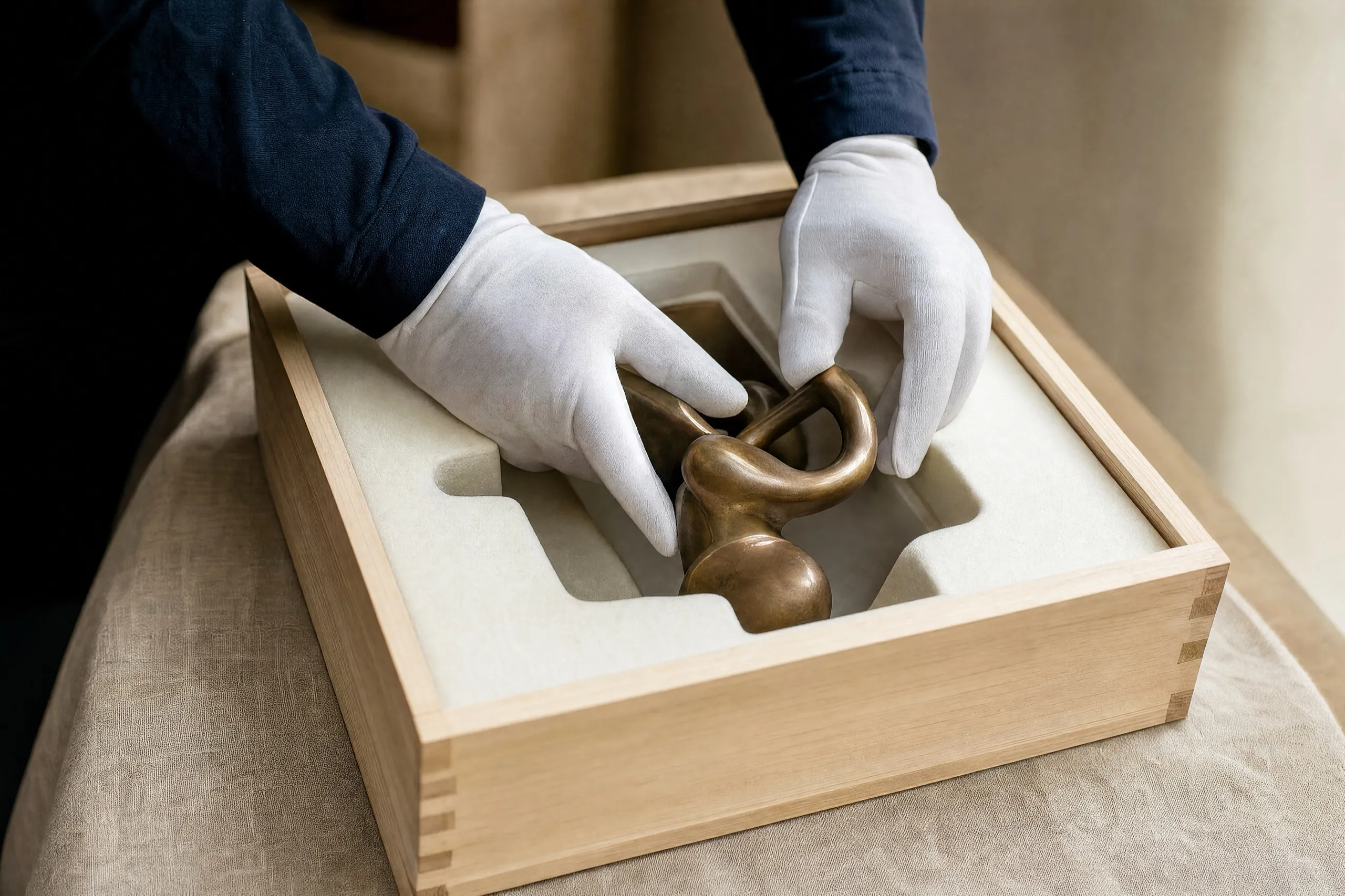
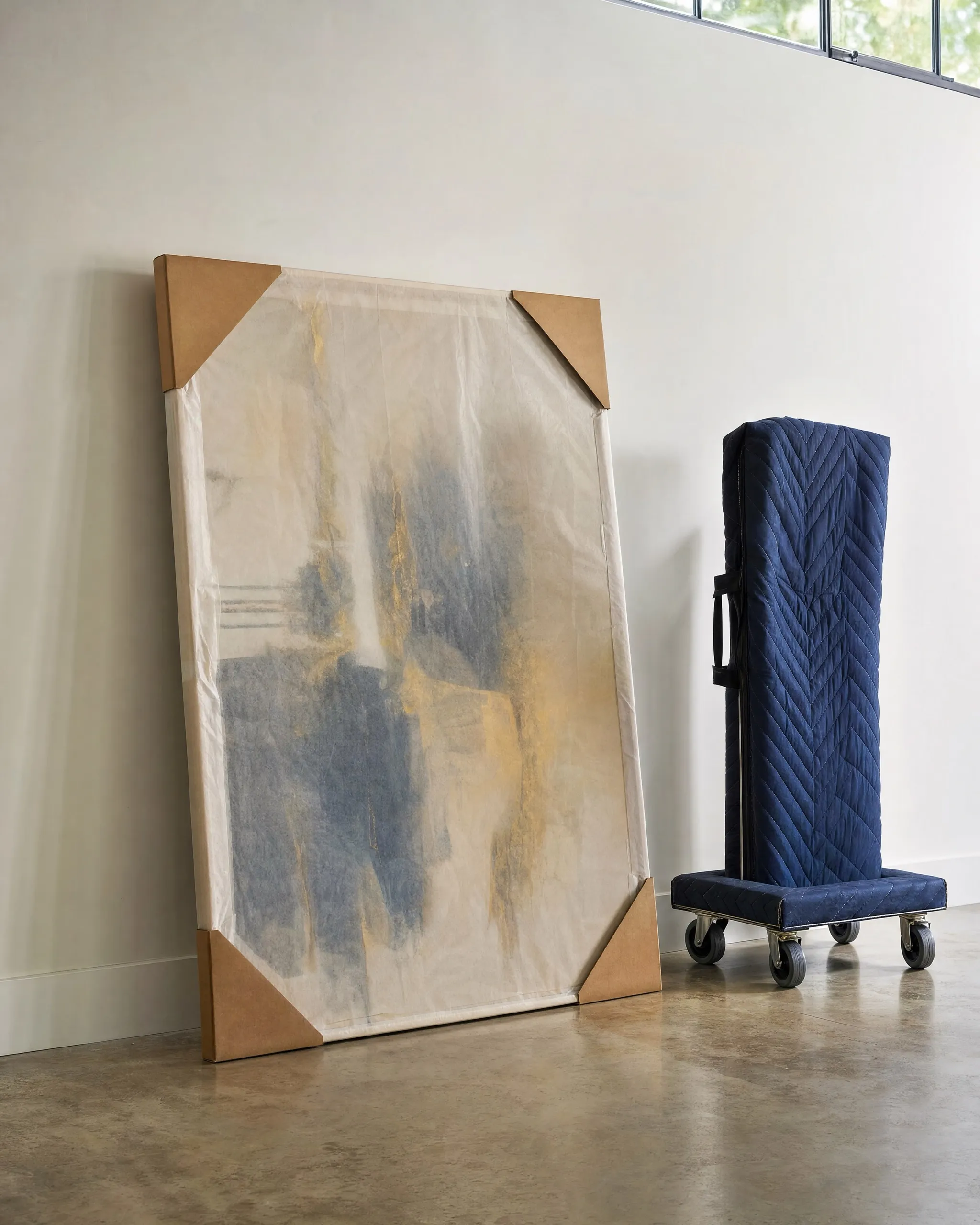
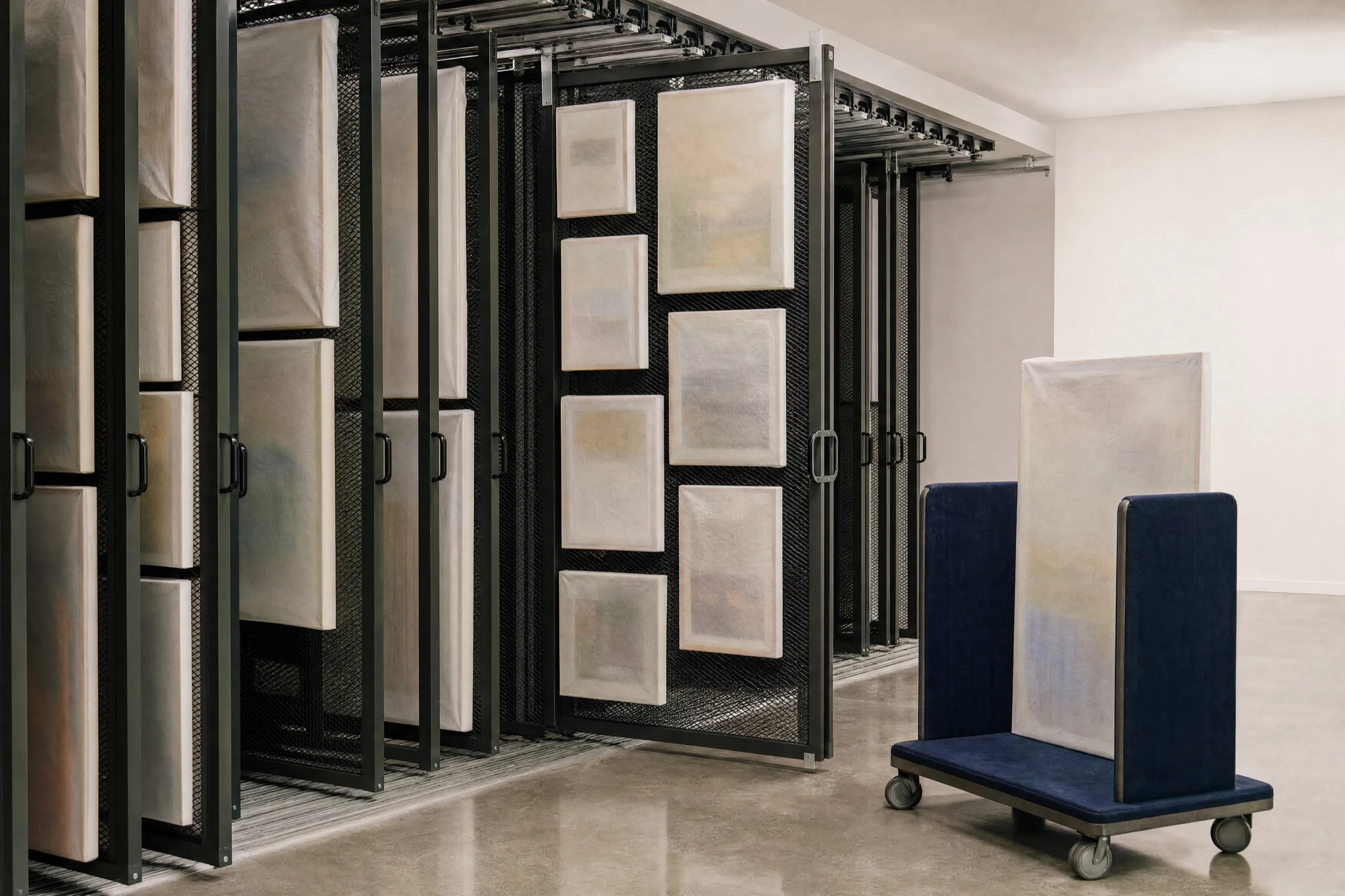
- Fine art and sculpture. We build crates to size for the paintings, works on paper and sculpture that need them, and a collection can move on its own schedule through fine art moving.
- Wine. A cellar is inventoried and packed by the bottle, then delivered to the new cellar or held in wine storage until it is ready.
- Safes, gym equipment and outdoor pieces. Heavy and awkward items are noted at the walkthrough, so the plan and the estimate account for them.
California sets a mover’s basic liability at 60 cents per pound per article, which is rarely enough for an estate. High-value pieces are listed on the inventory, and the valuation options for your move are explained in writing before move day.
Estate downsizing and move management
Not every estate move goes to a larger house. When parents leave a family home, when a couple downsizes from an estate to a smaller residence, or when a family is settling the estate of someone who has died, the work starts long before packing. Move management services cover it:
- Sorting and floor planning. Deciding what fits the new home, using its floor plan, and marking every piece as going, staying with family, sold, donated or stored.
- Distribution. Delivering pieces to several family members, taking consigned items to an auction house, and handling donation drop-offs.
- Settling in. Setting up the new home so it feels familiar on the first night: the bed made, the favorite chair in its place, the photographs on the wall.
- Coordination. Working with the executor or trustee, the estate attorney, the appraiser, the real estate agent and, when a parent is moving, any senior move management service the family already uses.
A senior move is paced differently: fewer decisions a day, familiar things unpacked first, and the new home arranged before the move-in day.
How to plan an estate move
- Start eight to twelve weeks out. Crating, storage and building approvals take time, and summer and month-end dates fill first.
- Name one decision-maker on your side, often the house manager, so we have one person to call.
- Hold the walkthrough with everyone who knows the house: staff, designer, and the contractor if the new home is still being finished.
- Decide what goes where before packing starts: the new home, a second home, storage, family, sale or donation.
- List high-value pieces for the inventory and get the valuation options in writing.
- Check building and HOA rules at both ends, including move hours, gate registration and certificates of insurance.
For typical price ranges by home size, see our guide to luxury moving costs in Los Angeles.