Office movers for Southern California businesses
An office move is judged on one morning: the first day in the new space. If every desk is where the floor plan says, chairs and monitors are at the right workstations and the kitchen is unpacked, the move went well, however much happened overnight to get there. Everything we plan on an office move is aimed at that morning.
Elite Moving & Storage moves professional offices, design studios, agencies, showrooms and galleries across Southern California, from towers in Downtown Los Angeles and Century City to creative offices in Santa Monica and Culver City and business parks in Irvine, Costa Mesa and Newport Center. We work with your office manager or facilities lead from the walkthrough to the first morning.
Some office moving companies in Los Angeles quote an hourly rate over the phone. We would rather see the space first, because the building, the furniture and your working hours decide how the move should run. When the move also relocates employees or executives to new homes, corporate and executive relocation covers the household side.
Office relocation services, planned in writing
Good office relocation services start with a plan everyone can read. After the walkthrough, which commercial movers often call a site survey, you receive a written scope, a schedule and a written estimate, followed by the tools that make move night work:
- A timeline. About three months of planning is comfortable for a small office, with the mover booked six to eight weeks out. Larger and multi-floor moves usually start six months or more ahead, especially when new furniture, cabling or a build-out is involved.
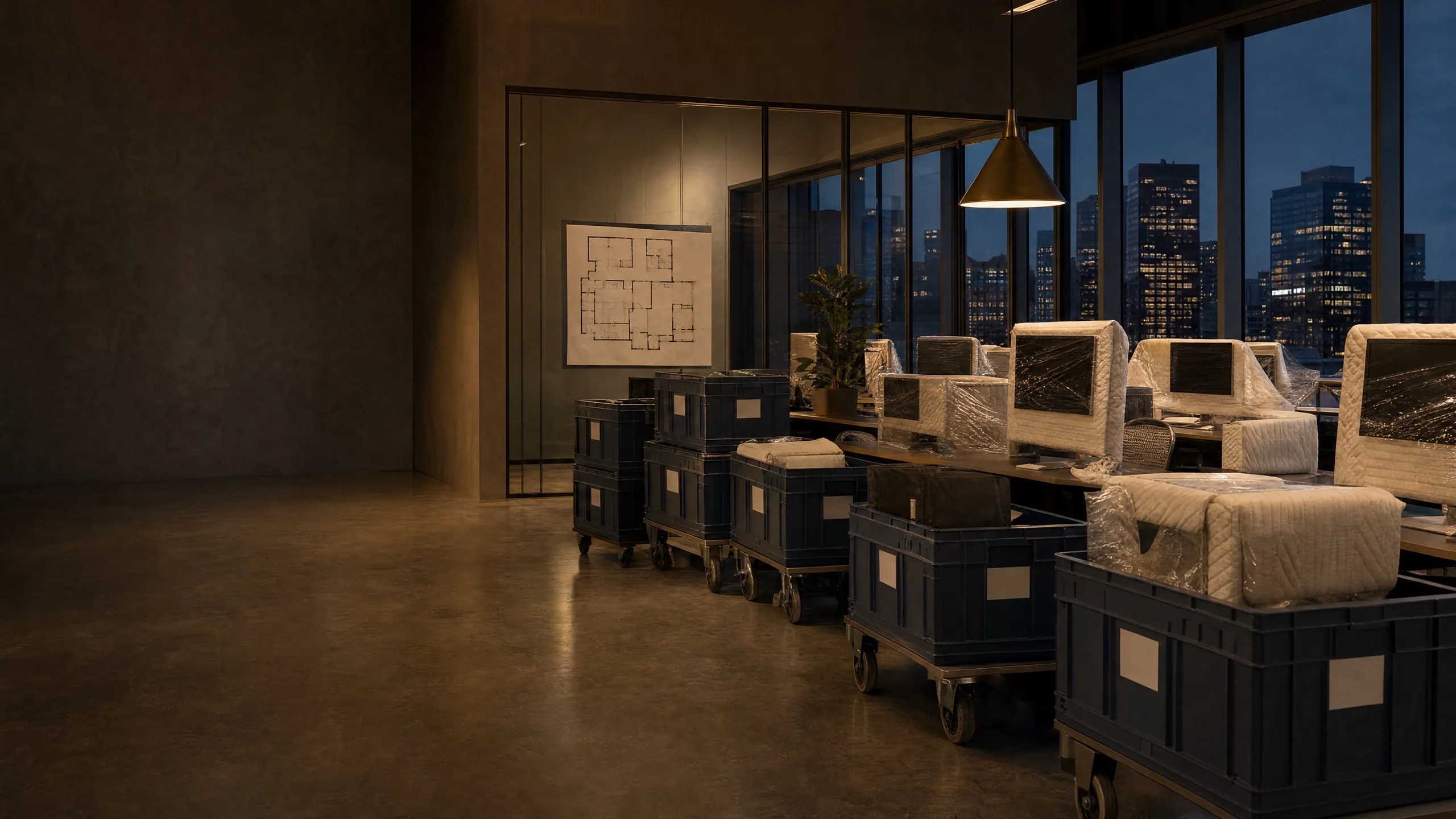
- A move-day floor plan. Every workstation, office and room in the new space gets a number. The plan is posted at the entrances on move night, so each piece goes straight to its place.
- A labeling system. Each crate, chair, file cabinet and piece of equipment carries a label that matches its destination number, often color-coded by floor or department.
- Packing instructions for your team. Employees get a short guide to packing their desks: what goes in the crates, what to leave for the crew and what to take home.
- A move-day schedule. Who is on site, when the dock and elevator are booked, and when each department is packed, moved and set up.
For a step-by-step version to share with your team, see the office relocation checklist.
After-hours and weekend office moves
Most businesses cannot close for a day, and many commercial buildings would not allow a daytime move if they could. So office moves usually run when nobody is working: packing after close, moving overnight or through a weekend, and setting up so the team starts on the next business day with phones, chairs and files where they belong.
Larger offices often move in phases, one department or one floor at a time, so part of the business keeps working while the rest moves. We sequence the phases around your own deadlines, such as a month-end close, a product launch or the last day of a lease.
Building rules: certificates, loading docks and freight elevators
Commercial buildings across Southern California run tight rules for moves, and both the building you leave and the building you move into need to sign off. A typical list:
- A certificate of insurance naming the building owner and property manager, with the coverage the building specifies. Many buildings will not book the dock until they have it.
- Loading dock and freight elevator reservations, usually in fixed time blocks, sometimes with a building engineer on site at the tenant’s cost.
- Move hours, often limited to evenings and weekends in high-rise office towers.
- Protection for elevator cabs, lobby floors, corridors and door frames, laid before the first piece moves.
- Truck parking where there is no dock, which can mean a city permit for loading on the street.
We collect each building’s move rules at the walkthrough and file the paperwork before move day, so property management already knows the plan when the crew arrives.
Commercial movers for design firms, showrooms and galleries
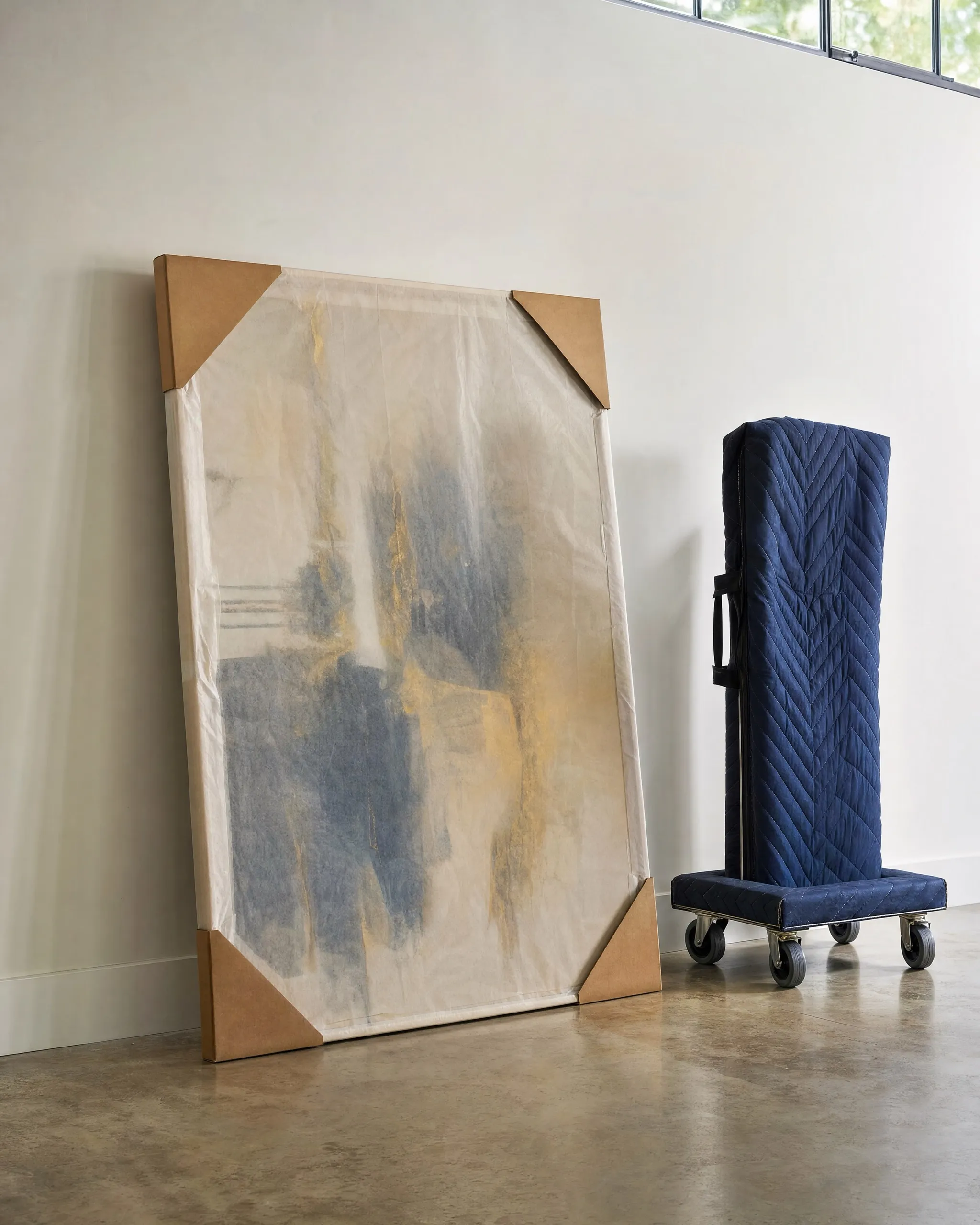
Not every commercial move is desks and filing cabinets. Interior design firms need FF&E (furniture, fixtures and equipment) received, checked, held and delivered to a client’s home or project on the day the installer is ready. Showrooms move display furniture, lighting and samples, often on a tight turnaround between seasons or markets. Galleries need artwork handled as carefully as it was hung, along with the office and storage rooms behind it.
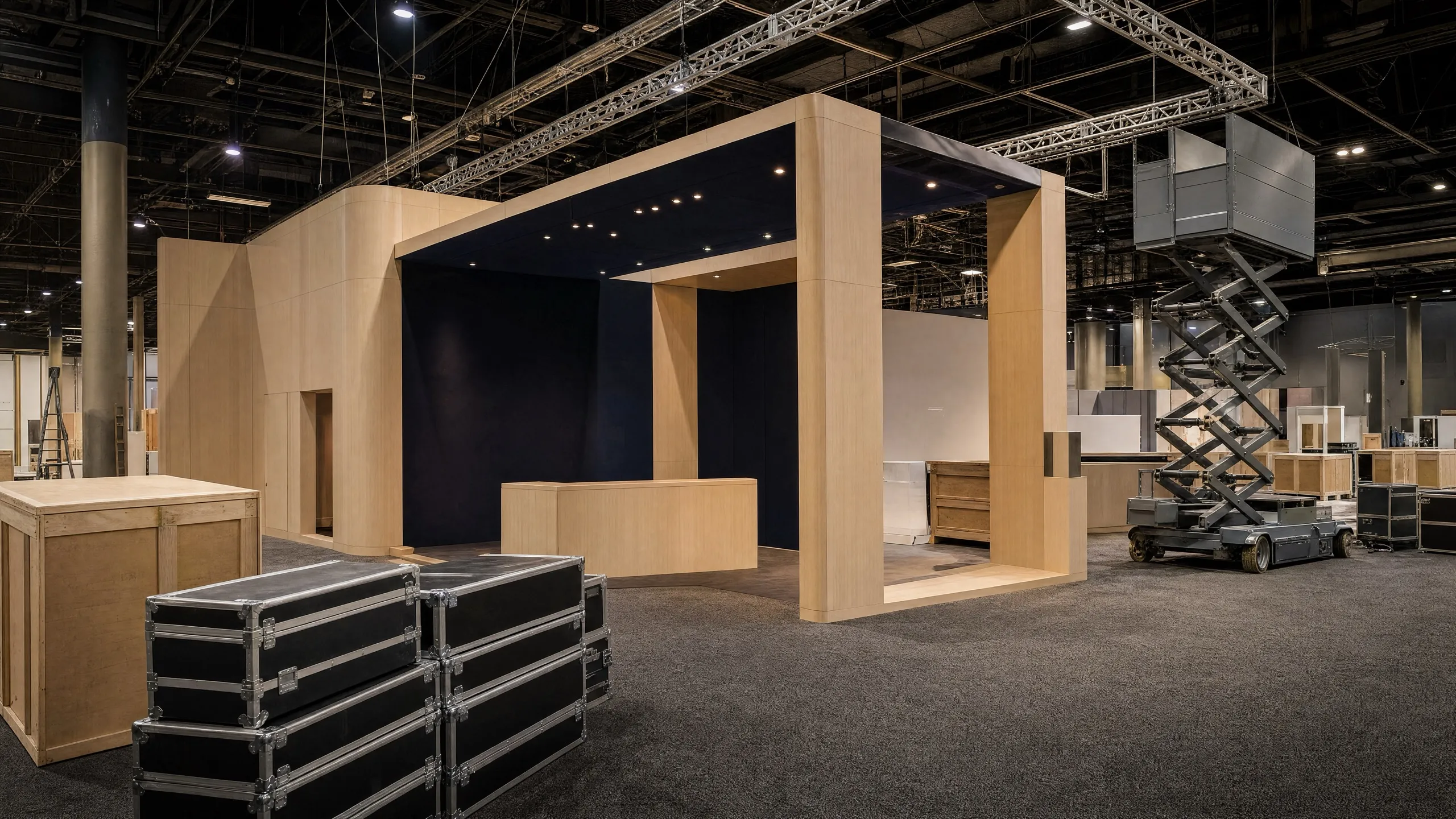
These moves call for the standards of white glove moving in a private home: blankets and film for finished pieces, custom crates for the glass, stone and art that need them, protected floors at both ends, and placement to plan. For showroom and exhibit pieces heading to a trade show at the Los Angeles Convention Center or the Anaheim Convention Center, see trade show and exhibit logistics.
IT relocation services and data-center moves
Technology is where office moves tend to go wrong, usually because nobody owned the handoff between the movers and IT. We keep that line clear. Computers, monitors, printers and peripherals are packed, labeled to their new desks and set back in place as part of the move. Server racks, network equipment and data-center hardware need a separate plan: your IT team or managed service provider handles backups, shutdown, disconnection and recommissioning, and the movers handle packing, transport and placement.
Tell us at the walkthrough what equipment is moving, where it is going and who on your side owns it, and it goes into the written plan with its own time slot.
Laboratory relocation is a separate discipline again, and a relevant one in Orange County, home to many life sciences and medical device companies. A lab move depends on your safety team’s chemical inventory and decontamination sign-offs, and on equipment vendors who recertify instruments after the move. If your move includes lab space, raise it in the first conversation so the plan starts with the right specialists.
Storage and decommissioning
Office moves rarely line up neatly with leases. Furniture may need to wait for a build-out to finish, archive boxes may need to leave the office but not the company, and some pieces are not coming at all. Furniture, equipment and records can be held in storage between spaces and delivered in phases.
What stays behind gets cleared properly: furniture donated, resold or recycled, old electronics sent to an e-waste recycler, and files with personal or client data securely shredded. The aim is an empty space, ready for lease handback, with nothing left behind for the landlord to charge you to remove.