Los Angeles

661-462-4944
Elite Moving & StorageLos Angeles
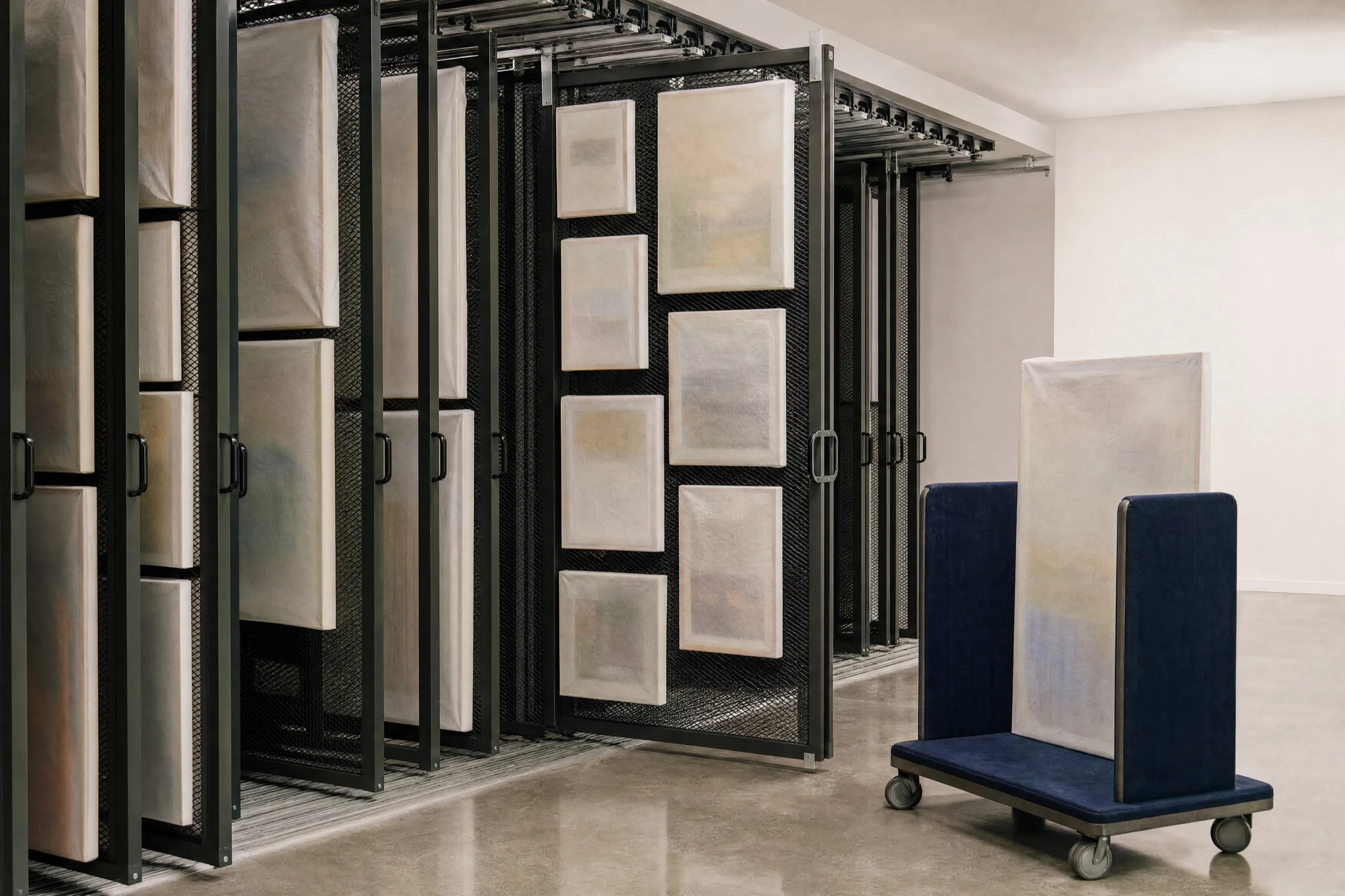
Sliding black mesh painting racks hold canvases wrapped in glassine, with one rack pulled out and a navy padded art cart carrying a wrapped canvas on a polished concrete floor.

Fine art storage

Fine art storage in Los Angeles, from pickup to reinstallation

The short answer

Art storage in Los Angeles keeps paintings, works on paper and sculpture in a stable space, commonly around 68 to 72°F and 45 to 55 percent relative humidity, racked or crated and off the floor. Elite Moving & Storage pairs fine art storage with moving and installation, handled by one team from condition photos at pickup to rehanging the work when you want it back.

What is included

What fine art storage includes

  • Condition report and photos

    Each work is examined and photographed front and back before it is packed, and checked against the same record when it comes out.

  • Soft-pack or custom crate

    Soft-pack for framed works stored briefly. Crates built to size for fragile, large or valuable pieces and for long-term storage.

  • Racked, upright and off the floor

    Paintings stand on edge in padded racks or bins, never stacked face to face, with nothing resting where a leak could reach it.

  • Stable temperature and humidity

    Art is stored in a space held at a steady temperature and relative humidity, away from light, dust and exterior walls.

  • Rotation on request

    Ask for a work by its inventory entry, and it is pulled, delivered and swapped with the piece going back into storage.

  • Rehanging on request

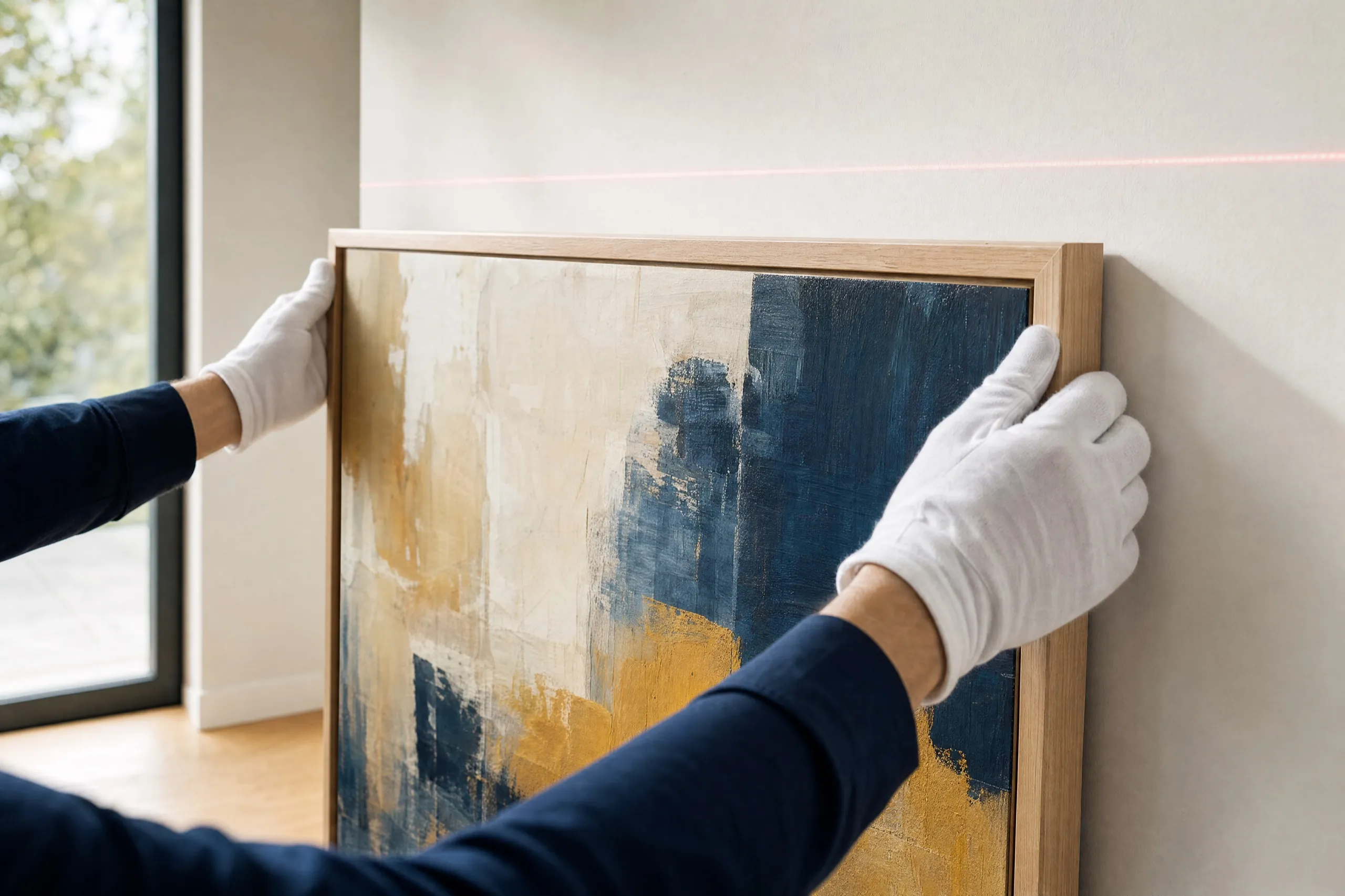
    When a work comes back, it can be hung on the same visit, level and at the height you choose, with hardware suited to the wall.

Fine art storage with the move and the rehang handled by one team

Los Angeles has dedicated fine art storage facilities, built for museums, galleries and large collections, with viewing rooms, registrars and loan paperwork. If your collection needs those, a specialist facility is the right choice.

Most private collectors need something simpler and more joined up. A painting comes off the wall because the house is being sold, a room is being remodeled or the collection is being rotated. Someone has to pack it, move it, store it and hang it again, and when those are four different companies, every handoff is a chance for something to go wrong. Elite Moving & Storage keeps the whole cycle with one team and one condition record, from the wall a work leaves to the wall it returns to, whether in the same home or a new one.

What art needs in storage

Conservators and collection-care guides agree on the basics:

  • Stable temperature and humidity. Widely cited guidance is about 68 to 72°F and 45 to 55 percent relative humidity. Stability matters most: canvas slackens and tightens as humidity moves, paint layers crack, wood panels warp and paper cockles.
  • Low light. Light fades pigments, dyes and paper, and the damage adds up, so stored art is kept covered or in the dark.
  • Upright and supported. Paintings stand on edge in padded racks or bins, never stacked flat and never face to face.
  • Off the floor. Nothing rests where a leak or a spill could reach it, and works are kept away from exterior walls and pipes.
  • Clean air. Dust, fumes and insects damage paper, textiles, wood and unvarnished surfaces.

The storage conditions and terms for your collection are put in writing before any work comes off the wall.

How to store paintings: crating or soft-pack

How a work is packed depends on what it is, how long it will be stored and how often it will move.

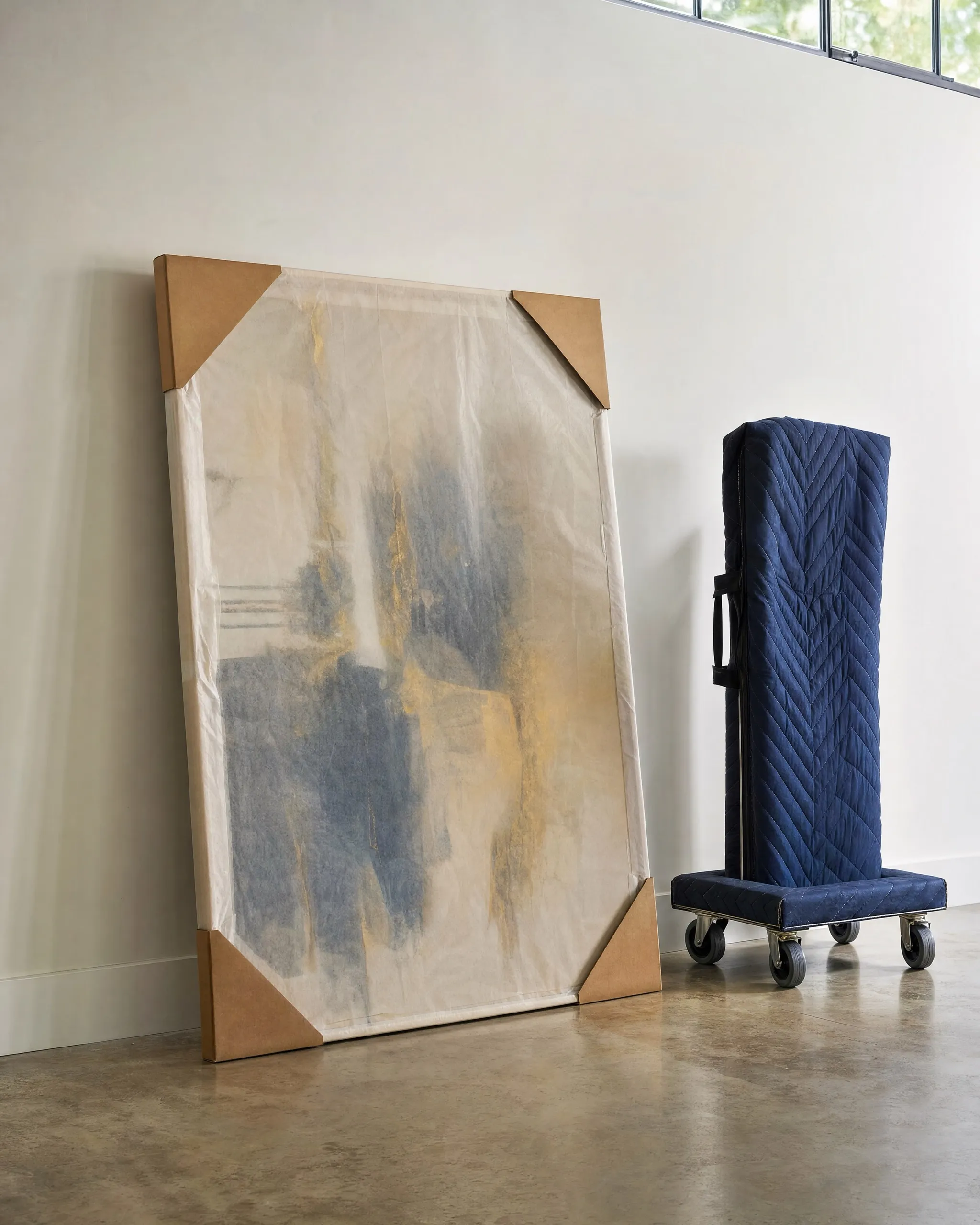
Soft-pack suits framed works stored for weeks or months rather than years, and works that come out often for rotation. The wrap is made for the rack rather than the road: a glassine layer, protected corners and a rigid outer face, labeled on the outside so a work can be found without unwrapping its neighbors. Nothing plastic sits against a painted surface for months, where it would hold moisture against the paint.

Crates suit works that are fragile, large or valuable, and anything going into long-term storage. A crate is built to the dimensions of the work, lined with foam and marked for orientation, so it is always carried and stored the right way up. Sculpture is braced inside its crate so it cannot shift. Storing large artwork takes its own plan: oversized canvases get crates or travel frames made for them, and the route out of the house is measured before anything is wrapped. Crating is the same work described on our fine art moving page, so a piece crated for a move can go straight into storage in the same crate.

Condition reports and a photo inventory at intake

Every work entering storage is examined and photographed before it is packed: the front, the back, the frame, labels and inscriptions, and any existing damage, from a scuffed frame corner to cracking in the paint. Those notes and photographs become the work’s record while it is in storage.

When the work comes out, it is checked against the same record, so you can see that it left exactly as it arrived. The record is useful beyond storage, too. Insurers, appraisers, auction houses and anyone buying the work will ask about condition, and a dated report with photographs answers the question.

When collectors use art storage

  • Between homes. Art often comes off the walls first and goes back last, after painting, lighting and furniture placement are finished.
  • During a remodel. Construction dust, paint fumes, vibration and trades working near the walls are hard on art. Taking works off site for the project is simpler and safer than protecting them in place.
  • Rotation. When a collection is larger than the walls, works rotate in and out of storage with the seasons or the mood of the house.
  • Second homes. Works move between residences, with storage in between.
  • Estates. While a family settles an estate, waits for appraisals or decides what to keep or consign, the collection is held and recorded. See estate moving.
  • Designers and galleries. Pieces bought for a project are held until the rooms are ready, then delivered and hung in one visit.

Delivery and reinstallation on request

When you want a work back, ask for it by its inventory entry. It is pulled from storage, checked against its condition report, packed for the trip and delivered. Art installation can follow on the same visit: the work is hung level and at the height you choose, with hardware suited to the wall and the weight of the piece, and the packing leaves with the crew.

Collectors who rotate works often swap pieces in a single visit: the incoming work is hung and the outgoing work is condition checked, packed and returned to storage on the same trip.

How to choose art storage in Los Angeles

Whoever you choose, these questions separate careful art storage from a room with a lock:

  1. What temperature and relative humidity is the space held at, and is it monitored?
  2. How are paintings stored? Upright in padded racks or crated, or stacked against each other?
  3. Will I get a condition report with photographs, at intake and again at release?
  4. Who packs, moves and installs the work, and is it one team or several?
  5. How do retrievals and rotations work, and how are they charged?
  6. What are the valuation terms while art is in storage and in transit, in writing?

If your collection needs private viewing rooms or institutional loan management, a dedicated fine art storage facility is worth it. If you want your art packed, stored and back on the wall without managing several vendors, storage that comes with the move and installation team is usually the better fit. Collectors with wine as well as art can keep both with us: see wine storage, and for the rest of the household, moving and storage.
How it works

Six steps, planned in writing

See the full process
  1. 01

    Private walkthrough

    We walk the home or office with you, in person or by video, and note every piece that needs special handling.

  2. 02

    Written inventory and plan

    You receive an itemized inventory, a crating list for art and fragile pieces, a crew and truck plan, and a written estimate.

  3. 03

    Building and HOA coordination

    We handle certificates of insurance, loading dock and elevator reservations, gate access and any street parking permits the move needs.

  4. 04

    Protection and packing

    Floors, doorways and railings are protected first. Furniture is wrapped, fragile pieces are packed with the right materials, crates are built for pieces that need them, and every box is labeled by room.

  5. 05

    Placement to plan

    Furniture is placed to your floor plan, beds are assembled, art is staged by the wall it belongs on, and packing debris leaves with the crew.

  6. 06

    Follow-up

    We check in once you have settled, to handle anything that needs adjusting, hanging or returning to storage.

Questions

Art storage questions, answered

How much does it cost to store artwork in Los Angeles?

Art storage in Los Angeles is usually priced by the space a collection takes up and for how long, with packing, crating, transport and installation quoted separately. Crated works take more space than racked ones, and frequent rotation adds handling. The most reliable way to get a real number is a walkthrough, where each work is measured and the storage plan and written estimate are built around it.

Can you store art in a storage unit?

You can, but it is risky for anything valuable. Most self-storage units are not humidity controlled, many are not temperature controlled, and in inland Los Angeles summer heat builds quickly inside them. Paintings, works on paper and photographs react badly to heat and humidity swings. If you use a unit, choose climate control, keep paintings upright on padded supports off the floor, and never stack them face to face.

What temperature and humidity should artwork be stored at?

Widely cited collection-care guidance is about 68 to 72°F and 45 to 55 percent relative humidity, the long-standing museum benchmark of roughly 70°F and 50 percent. Stability matters more than an exact number: rapid swings make canvas slacken and tighten, crack paint, warp wood panels and cockle paper. Art should also be kept out of light, off the floor and away from exterior walls, pipes and anywhere a leak could reach it.

How should paintings be stored long term?

Paintings should be stored upright on their edges, in padded racks or bins or in crates built to size, never lying flat in a stack and never face to face. Wrap framed works in glassine first, protect the corners, and keep plastic and bubble wrap off painted surfaces, where they can mark paint and trap moisture. Store everything off the floor in a stable, dark space.

Do I need separate companies to move, store and hang art?

Not necessarily. Many collectors use a fine art shipper, a storage facility and an installer, which means three schedules and three handoffs. Elite Moving & Storage handles all three with one team, so a work that comes off your wall is packed, stored and hung again on one plan, with one condition record. For institutional loans or private viewing rooms, a dedicated fine art storage facility may suit better.

Why does art storage start with a condition report?

Because it is the only way to show that a work left storage in the same state it went in. At intake, the surface, frame, glazing, back and any existing damage, such as scuffs, losses or cracking in the paint, are recorded with photographs. The same record is checked at release. A dated report is also what insurers, appraisers and buyers ask for when a work is claimed, valued or consigned.

Is my art protected while it is in storage?

Get the terms in writing before a work leaves your wall. For moves within California, a mover's basic liability is 60 cents per pound per article, which means almost nothing for a painting. Storage has its own written agreement and liability terms. Ask about higher valuation options, list high-value works on the inventory, and tell your fine art insurer where the collection is, since many collection policies cover works in storage and in transit.

How do I get a piece back from art storage?

Ask for it by its inventory entry. The work is pulled from storage, checked against its condition report, packed for the trip and delivered, and the installation team can hang it on the same visit. Collectors who rotate works often swap pieces in one visit, sending the outgoing work back into storage on the same truck, with its condition recorded again.

Request a quote

Plan your move with a private walkthrough

Tell us what is moving and when. We will arrange a walkthrough, in person or by video, and send a written plan and estimate.