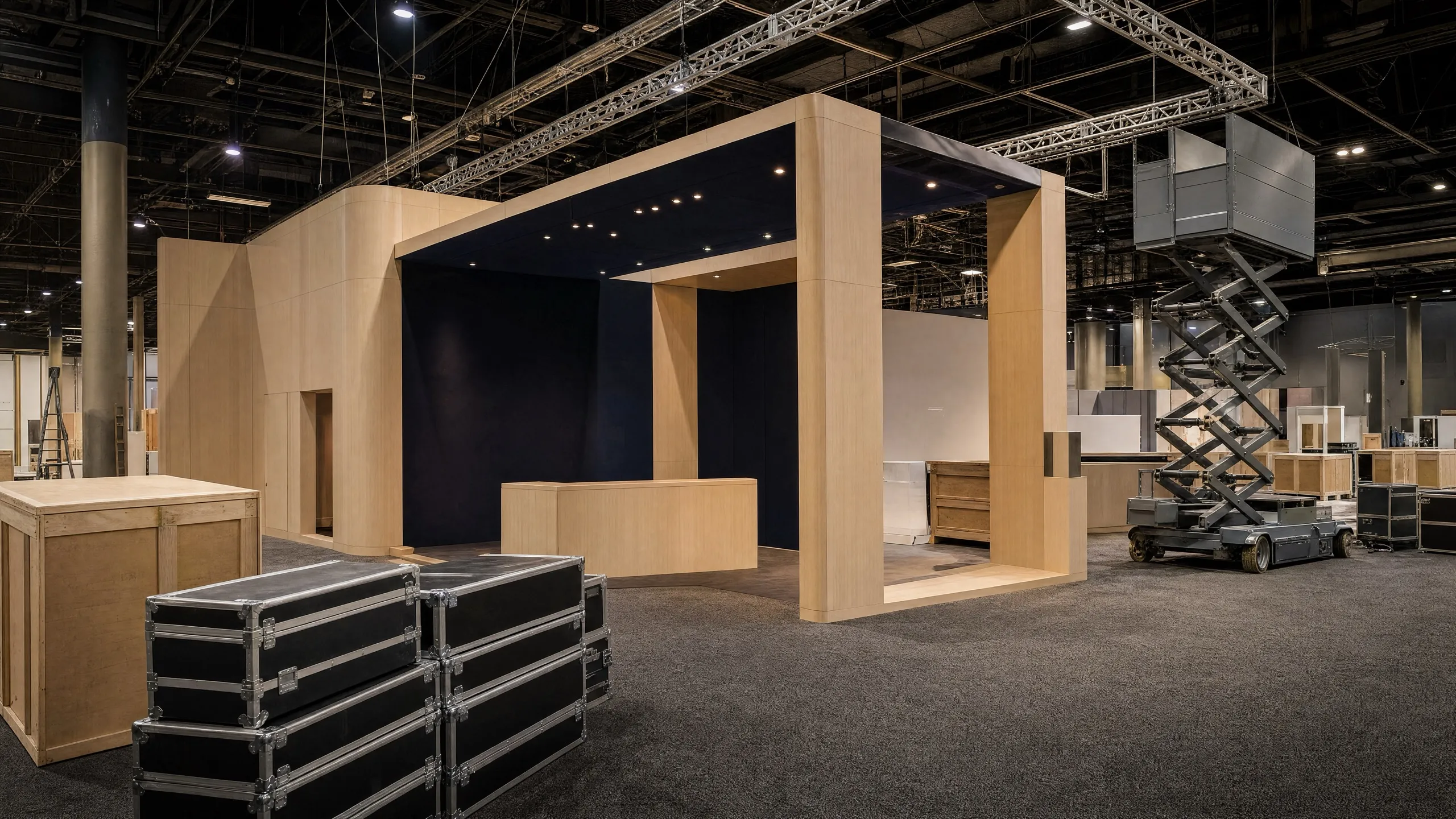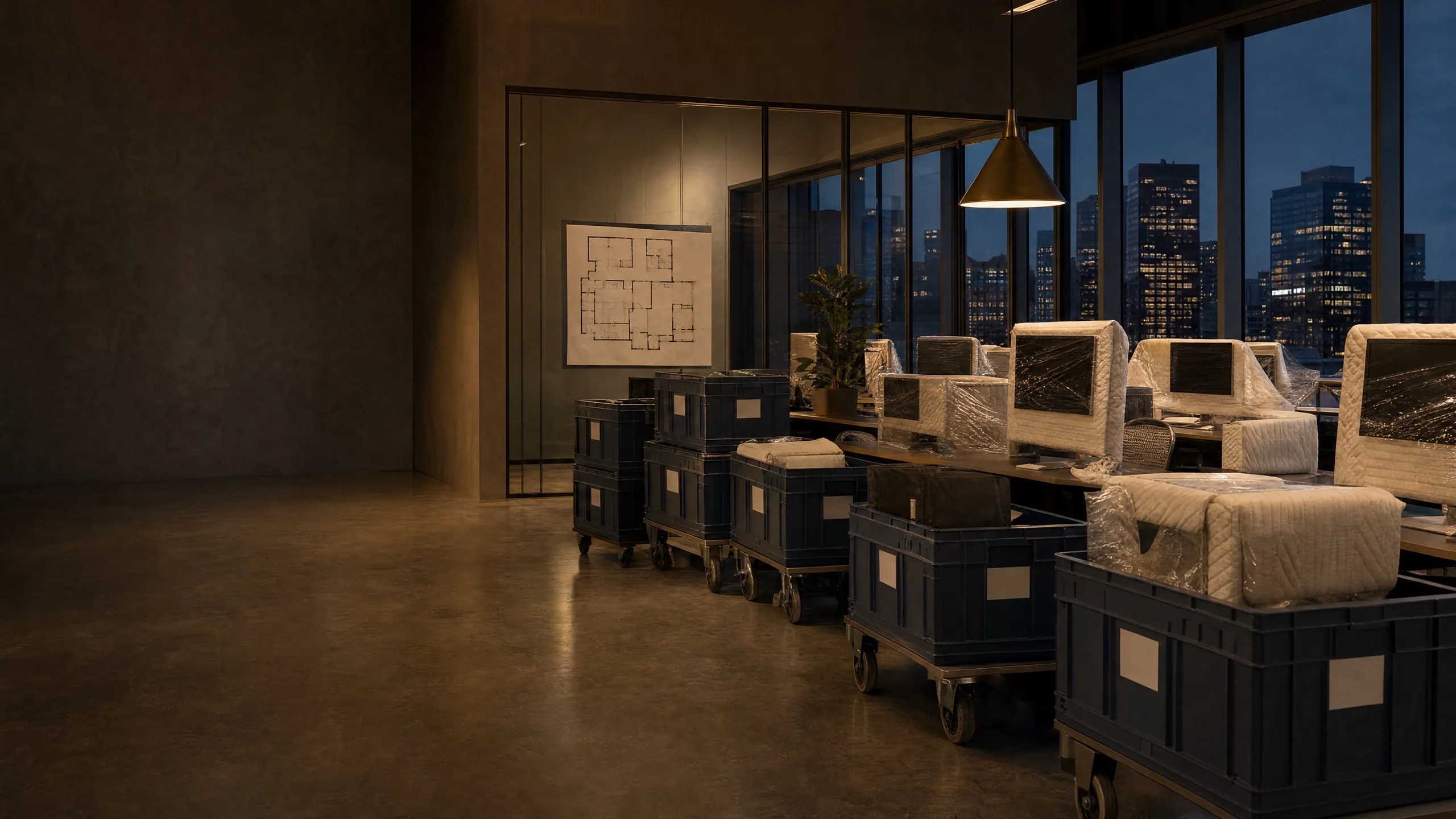
This guide covers the physical side of an event: what gets delivered, when it goes in, how it is set and how it comes out. It is written for corporate event planners, executive assistants and marketing teams, and for hosts planning an event at home in Southern California. For the service itself, see event logistics in Southern California. Moving the office itself? Use the office relocation checklist.
What is event logistics, and what does it cover?
Event logistics is the planning and movement of everything physical an event needs. The event planner designs the event; the logistics plan turns that design into a schedule of trucks, crews and time windows. It covers five jobs:
- Venue access. Dock times, freight elevators, vendor rules and paperwork.
- Transport. Furniture, decor, staging, equipment and signage from warehouses, rental companies and storage to the venue.
- Load-in and set. Deliveries in the order setup needs them, and placement to the floor plan.
- Strike and load-out. Taking everything down and clearing the venue inside its move-out window.
- Returns and storage. Rentals back to their vendors, owned pieces back into storage.
Event logistics timeline: 8 to 12 weeks out to strike day
8 to 12 weeks out
- Get the venue’s vendor or production guidelines and read them before planning anything physical. They set dock hours, insurance requirements, deadlines and the services the venue keeps for itself.
- Walk the venue with your logistics lead and measure the route from the dock or curb to the room: doors, corridors, ramps and the freight elevator.
- Note exclusive services. At the Los Angeles Convention Center, for example, food and beverage, internet and telecommunications, and house sound are provided only by the venue’s partners.
- Sketch the floor plan, start the inventory, and book the logistics partner and rental companies.
4 to 6 weeks out
- Finalize the floor plan and submit it if the venue requires one. The Los Angeles Convention Center’s event planning guide asks for floor plans at least 30 days before move-in, for fire marshal approval.
- Send certificates of insurance naming the parties the venue specifies. Many venues want them weeks before the event.
- Collect flame-retardant certificates for drapes, fabric and decor.
- Request dock and freight elevator times for load-in and load-out.
2 weeks out
- Confirm the load-in schedule with every vendor, and send the venue the crew list and vehicle details if it asks for them.
- Pack, label and stage owned inventory, and confirm rental delivery and pickup times.
The week of the event
- Reconfirm dock times, contacts and the weather plan for anything outdoors.
- Print the load plan and floor plan for every crew lead.
Event day and strike day
- Load in, set, and walk the room with the planner before doors open.
- Strike after the last guest leaves, load out inside the venue’s window, and walk the space with the venue before leaving.
How do you build a load-in and load-out plan?
The load plan is one document that tells every vendor when to arrive, where to unload and where each item goes. Build it from the venue’s rules:
| Ask the venue for | Why it matters |
|---|---|
| Vendor or production guidelines | Rules, deadlines and exclusive services |
| Dock location, hours and slot booking | Sets the load-in and load-out schedule |
| Freight elevator dimensions and capacity | Decides what fits and how it travels |
| Certificate of insurance wording and deadline | Many venues will not allow load-in without it |
| Floor plan and fire marshal deadlines | Late plans can hold up approval |
| Move-out time | Sets the size of the strike crew |
- Sequence the docks. Schedule deliveries in setup order: structure first (staging, draping, lighting), then furniture, then decor, with fragile and perishable pieces last.
- Measure against the elevator. Check the cab, door and weight capacity against your largest piece. The Los Angeles Convention Center publishes each freight elevator’s size; its Figueroa freight elevator is 9 feet 6 inches wide, 9 feet 9 inches high and 15 feet 4 inches deep.
- Bring your own equipment. Carts, dollies and floor protection come with the crew. The Los Angeles Convention Center prohibits using its equipment for loading and unloading, and some hotels require protective floor boards before heavy freight enters a ballroom.
- Certify the decor. Under California’s fire regulations, drapes, hangings and other decorative materials in places of assembly must be nonflammable or treated with a flame retardant approved by the State Fire Marshal. The Los Angeles Convention Center requires California certificates on site and does not accept certificates from other states.
- Know the out-time. Ask when the venue needs the room back. If another event follows, the strike deadline is fixed.
The inventory: furniture, decor and rentals, item by item
Every item that travels gets a line. A simple inventory prevents the two most common event-day problems: pieces that never arrive and pieces that never come back.
| Item | Qty | Source | Pickup | Destination | Handling | After the event |
|---|---|---|---|---|---|---|
| Lounge sofa | 2 | Owned, in storage | Storage, 7 a.m. | Lobby lounge | Blanket wrap | Back to storage |
| Cocktail tables | 12 | Rental company | Vendor delivers | Ballroom | Vendor sets | Vendor pickup at strike |
| Framed artwork | 4 | Company office | Office, day before | Stage wall | Crated | Back to the office |
For each line, record the dimensions and weight of anything large, whether it needs assembly, and its condition going out, with photographs. Add every rental company’s delivery and pickup windows, so the strike crew knows what stays behind for the vendor and what leaves on your trucks.
Events at home: protecting the house and putting it back
A wedding, fundraiser or company party at a private home turns the house into a venue for a few days. The logistics are the same; what is at stake is a family’s floors and furniture.
- Photograph every room that will change before anything moves, so each piece can go back exactly where it was.
- Move furniture out, wrapped, to a garage, guest house or off-site storage, to make room for tables, a dance floor or bars.
- Protect vendor routes with floor runners, door jamb covers and stair rail wraps on every path caterers, rental crews and florists will use.
- Plan the street. Truck staging, notice to neighbors and any city permits for the curb.
- Mind noise hours. In the City of Los Angeles, loading or unloading a vehicle, or rolling carts and dollies, in a way that makes impulsive or unnecessary noise within 200 feet of a residence is prohibited from 10 p.m. to 7 a.m. (Municipal Code Section 114.03). A late party may mean a quiet strike that night and loading the trucks the next morning. Other cities set their own rules.
- Check tent permits. Under the California Fire Code, a tent over 400 square feet generally needs a fire department permit, though canopies open on all sides can be exempt up to 700 square feet with 12 feet of clearance. Decide early who applies for it.
- Put the house back against the photographs, then walk it with the homeowner or house manager.
This is the same discipline as estate moving: a photographed inventory and one plan for the whole household.
Trade shows and conventions: what changes
Trade shows add a layer of rules on top of the venue’s own:
- The exhibitor kit sets shipping addresses, deadlines and labeling rules. Read it the day it is released.
- Advance warehouse or direct to show site. Freight either goes to the general contractor’s warehouse ahead of the show or arrives at the venue during your targeted move-in window.
- Marshaling yards. Large shows route trucks through a staging lot before dispatching them to the docks. For many Los Angeles Convention Center shows, drivers must check in at an off-site marshaling yard first, and the Anaheim Convention Center opened a six-acre marshaling yard in August 2024.
- Material handling. The show’s general contractor charges separately to move freight from the dock to the booth and to store empty crates.
- Outbound deadlines. Carriers must check in by the show’s deadline at close, or the freight can be rerouted at the exhibitor’s expense.
For exhibit shipping, move-in windows and storage between shows, see trade show and exhibit logistics.
Storing event inventory between events
Companies and planners who host events regularly build an inventory of their own: lounge furniture, bars, branded displays, signage and seasonal decor. Storing it with an itemized record, photographs and dimensions turns the next event into a pull list. Pick the pieces, schedule delivery, and have them collected and checked back in after the strike. The record also shows what was damaged or lost before the next event is planned around it. See storage for how storage works.
Day-of runbook: from load-in to strike
- Crew call and briefing. The logistics lead walks every crew through the load plan, floor plan and venue rules.
- Check in at the dock. Dock passes, vehicle details and the venue’s security or dock contact.
- Protect the route. Floor protection, corner guards and elevator pads before the first piece moves.
- Load in by sequence. Structure, then furniture, then decor, then fragile and perishable pieces.
- Set to the floor plan. Check each zone against the plan and log any substitutions.
- Final walk before doors open. The planner signs off, crews clear the loading path and empty cases go to their holding area.
- Stay reachable during the event. Keep a small crew or a named contact on call for resets.
- Strike. Pack and wrap in reverse order, checking every piece against the inventory.
- Load out on time. Trucks leave in order of their next stop: rental returns, storage, the office.
- Walk and hand back the venue. Walk the space with the venue contact, photograph it and note any issues in writing.