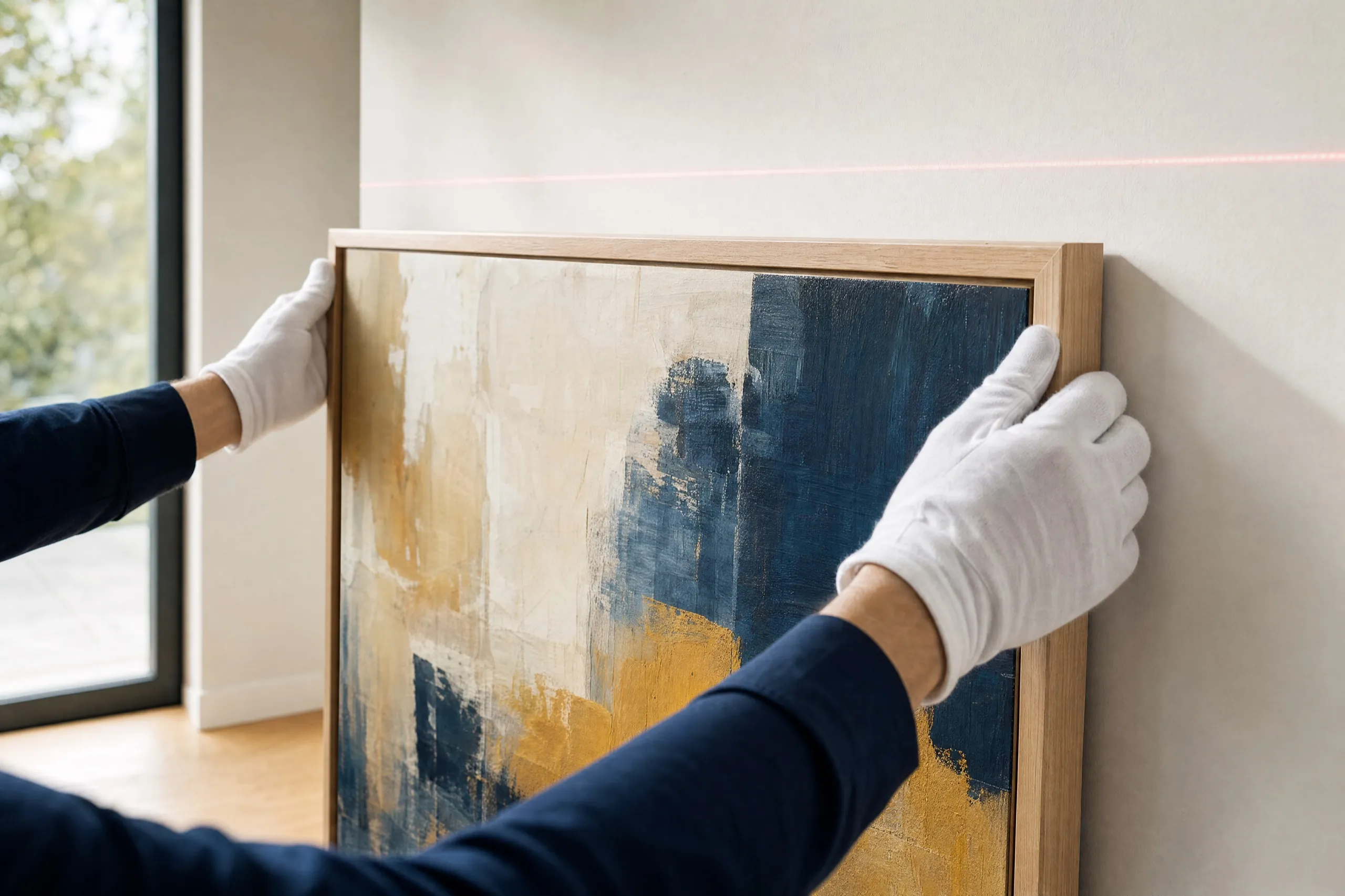
Professional art installers for Southern California homes
Installation is where a collection meets the house. The work is precise and a little unforgiving: a quarter inch off level shows across a room, a hook in the wrong wall material fails years later, and in Southern California every wall has to be planned for the next earthquake.
Elite Moving & Storage provides professional art installation for collectors, homeowners and the designers who work with them. We hang new acquisitions, rehang whole houses after a move, mount mirrors and sculpture, and rotate pieces in and out of storage. As Southern California art installers, we hang work in homes from Beverly Hills and Santa Monica to the coast in Newport Beach and Laguna Beach, where salt air is hard on plain steel and hardware is chosen with that in mind. When the art is also traveling, fine art moving and installation run on one plan, from the last wall to the next.
Picture hanging and salon walls
Good picture hanging starts on paper, not on the wall.
- Centerline. Many museums and galleries hang so the center of each work sits about 57 inches from the floor, close to average eye level. We adjust for ceiling height, furniture and how the room is used: art in a dining room is often seen seated and may hang lower.
- Templates. For groupings, each frame is traced on kraft paper, marked with its hanging point and taped to the wall. You see the arrangement before a single hole is drilled.
- Scale. A single work above a sofa, console or bed usually looks right at about two-thirds of the furniture’s width, with its bottom edge roughly 6 to 10 inches above.
- Salon walls. A salon hang is built from an anchor piece outward, with consistent gaps of about 2 to 3 inches between frames and the whole group treated as one shape with a shared centerline.
Heavy mirrors and large-format works
A heavy mirror is only as secure as the wall behind it. Before anything substantial goes up, we identify the wall construction and choose hardware to suit.
- Drywall over wood studs. The strongest fixing is into the studs. Where the layout does not land on a stud, rated anchors or a French cleat spread the load along the wall.
- Lath and plaster. Common in older Los Angeles homes, including Spanish Revival houses and Pasadena Craftsmans. Plaster cracks easily, so holes are drilled rather than hammered, and heavy pieces go into the framing behind the lath.
- Concrete, brick and stone. Masonry bits and sleeve or wedge anchors. On tile, holes go through grout lines where the layout allows, and tile or diamond bits keep the face from chipping.
- Cleats and security hardware. French cleats, two interlocking beveled rails, carry long and heavy pieces evenly. Security hangers lock a frame to the wall so it cannot simply be lifted off.
Large works may need three or four installers, a lift or scaffolding, and a planned route through the house. We note all of it at the walkthrough so it is in the estimate.
Seismic art hanging for Southern California
Earthquakes are the local reason to hang art carefully. The goal is simple: nothing should hop off a hook, swing into its neighbor or slide off a shelf when the house shakes.
- Closed hooks and security hardware. Open hooks let a wire jump free in a sharp jolt. Closed or locking hooks, D-rings screwed to the frame, and security hangers keep the frame on the wall.
- Two points of attachment. Two hangers keep a frame level and stop it swinging sideways into the wall or the next frame.
- Acrylic over glass. For works above beds and sofas and in hallways, reglazing with acrylic removes the risk of broken glass. A framer can do it, and museum-grade acrylic also filters most UV light.
- Placement. Heavy pieces stay away from beds, cribs and seating where possible, and very heavy mirrors go into framing rather than relying on anchors alone.
- Objects on shelves. Museum putty, wax or gel holds vases, bowls and small sculpture in place. Heavier pieces get discreet brackets, and tall cabinets are secured to the wall.
Museums in earthquake country take this seriously. The J. Paul Getty Museum has long used seismic isolation mounts for heavy antiquities. A home rarely needs that engineering, but the same thinking applies: low centers of gravity, secure fixings and nothing loose on a shelf.
Sculpture, pedestal and object mounting
Sculpture is installed for its center of gravity. A tall piece on a narrow pedestal can topple in a small shake, so we look at weight, base size and footing before choosing a method.
- Weighted pedestals, or pedestals fixed to the floor or wall, for top-heavy pieces.
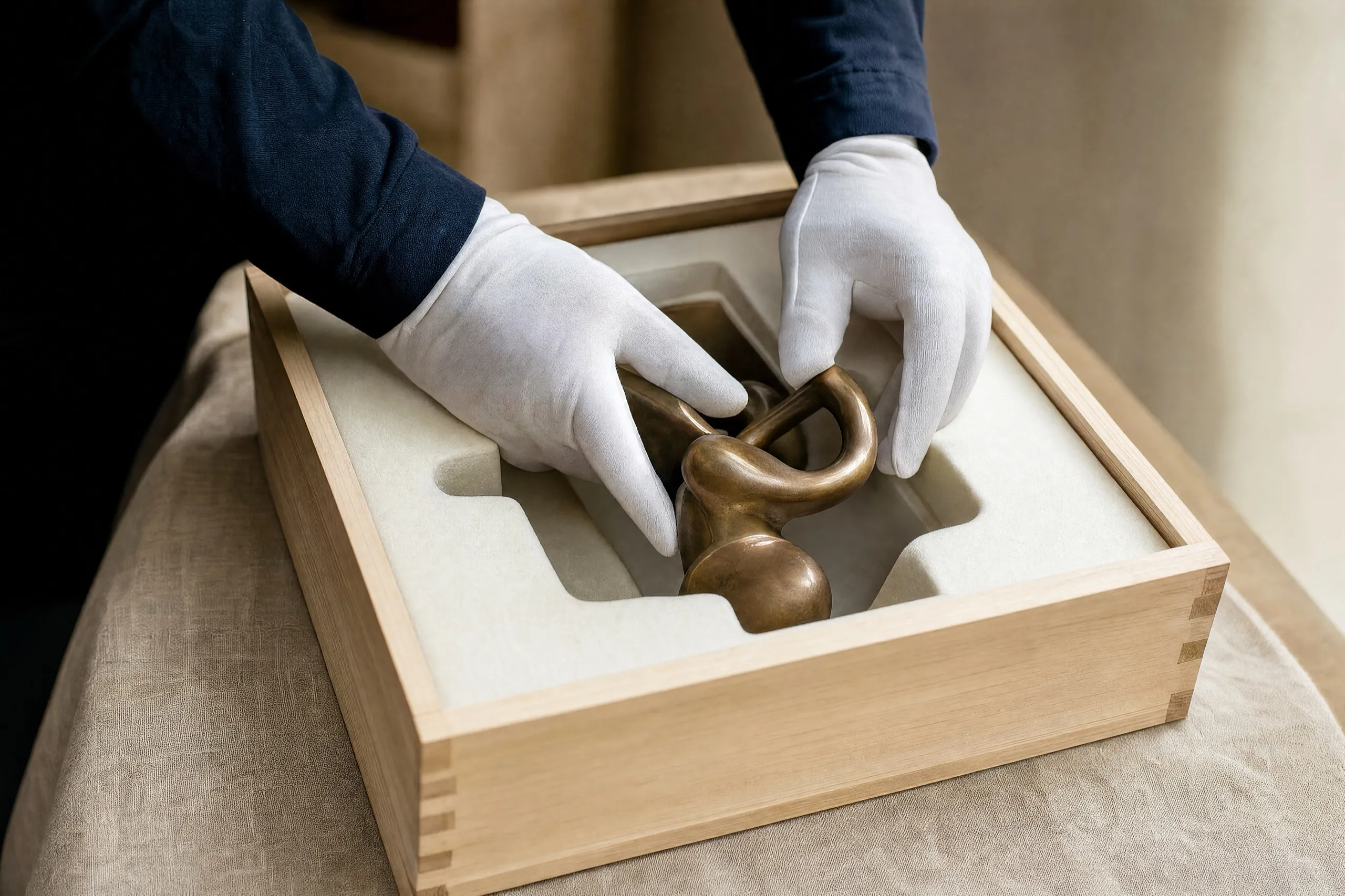
- Custom brackets and mounts, made by a mountmaker where the object calls for it, so the piece is held without drilling into it.
- Museum wax or discreet tethers at the base of smaller works.
- Textiles and tapestries hung from a sewn sleeve on a rod or a sewn hook-and-loop strip, which spreads their weight along the top edge.
- Level, stable pads for outdoor sculpture, planned with your landscape contractor when a piece is going into a garden.
Installing art after a move or from storage
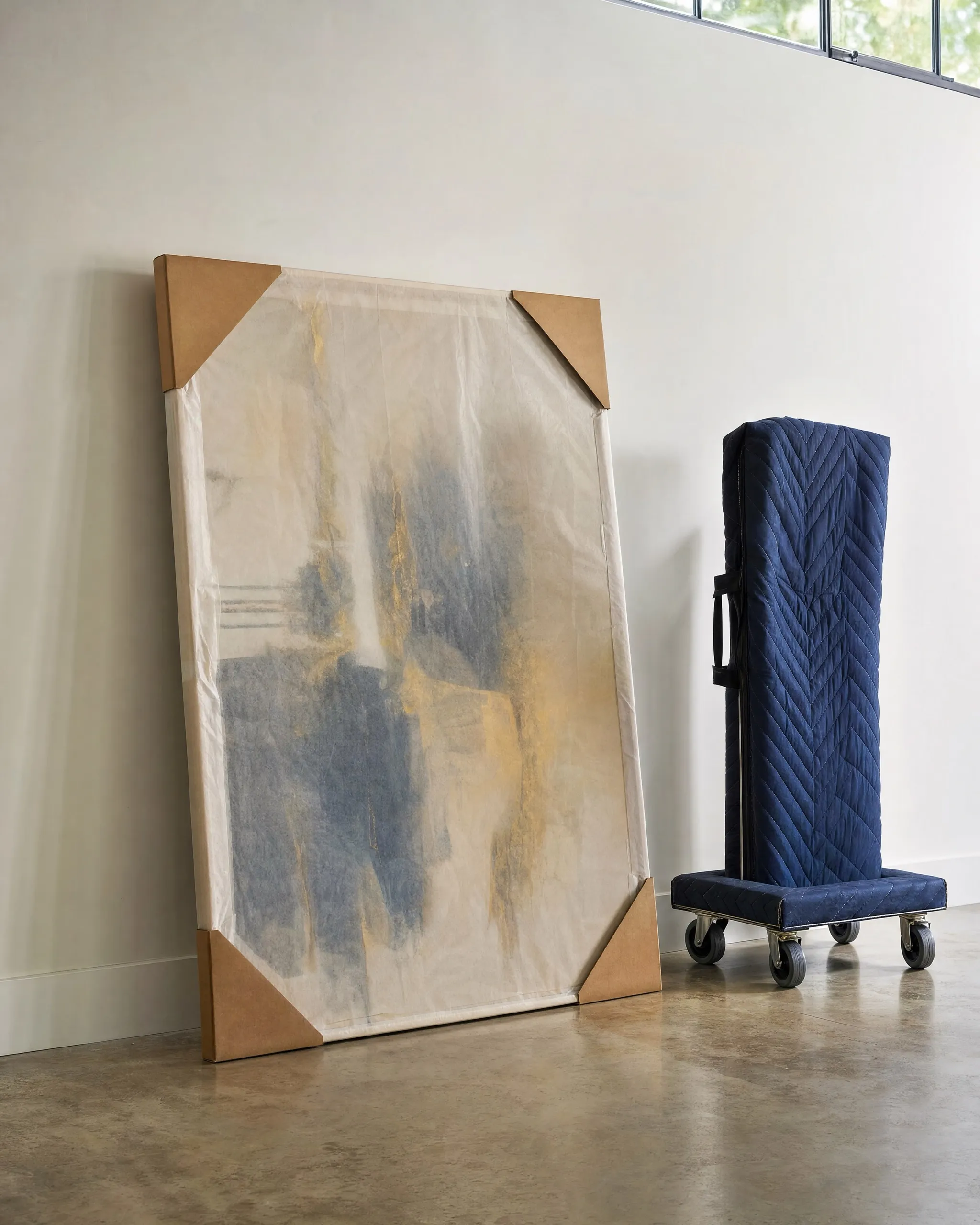
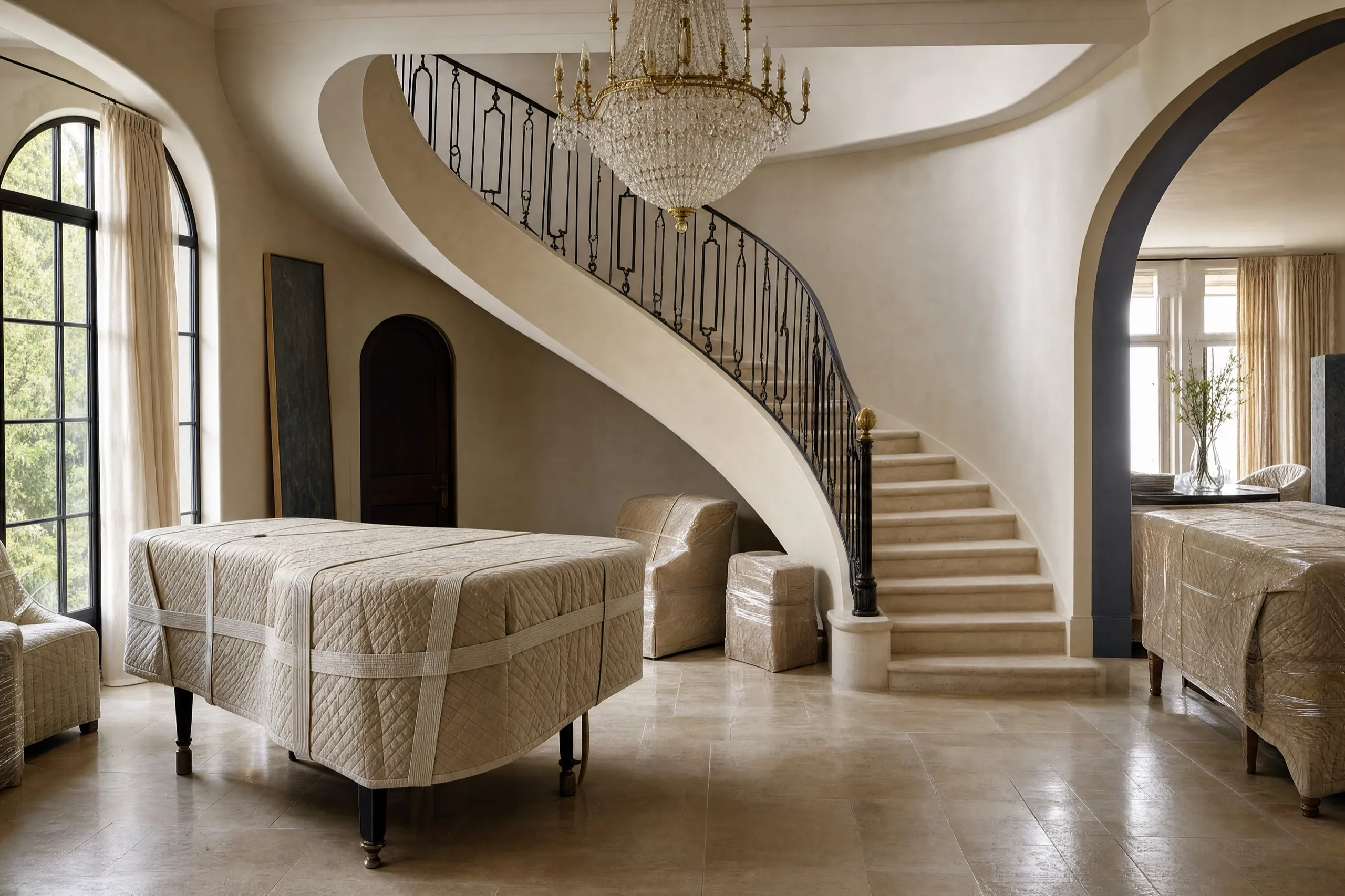
Art goes up last. After a move, rugs go down and furniture is placed first, because the position of a painting depends on the sofa or console beneath it. Pieces are staged by the wall they belong on, unpacked, checked against their condition reports and hung once the room is set. The move that comes before the hang is covered under white glove moving.
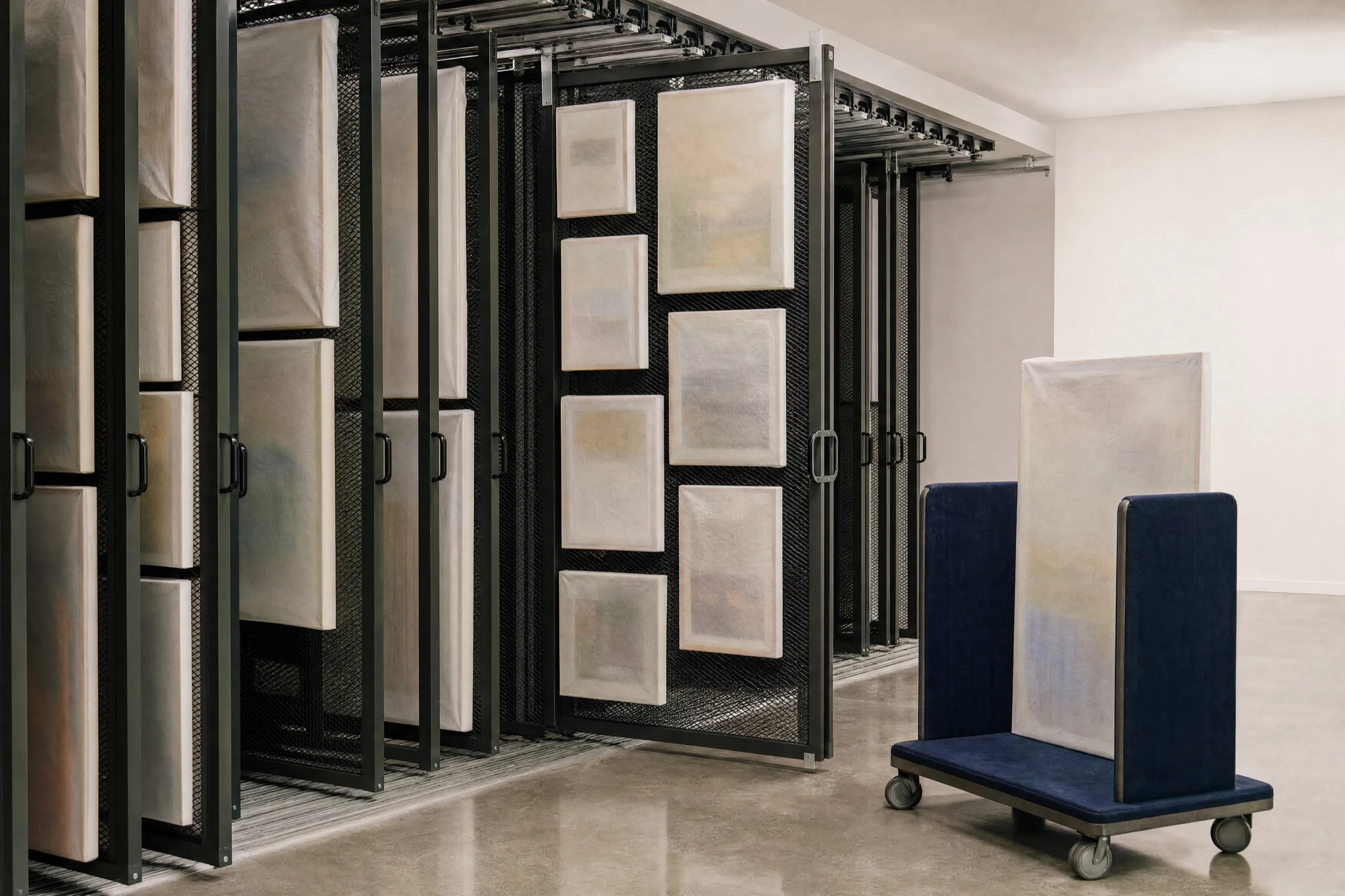
Collectors with more art than walls rotate. A rotation is one visit: we take down and wrap the pieces coming off the wall, bring the next group out of fine art storage, hang it, and patch any holes that will not be reused.
Working with designers, architects and lighting
Much installation work follows an interior designer’s elevations or an architect’s drawings. We hang to the drawings, flag conflicts with outlets, switches, sconces and blocking before drilling, and work around the other trades on site.
Lighting changes how art reads. A common starting point is to aim accent lights at about 30 degrees from vertical, which lights the surface while keeping glare and frame shadows down. LED fixtures produce little UV, but works on paper, photographs and textiles should still stay out of direct sun. Where a lighting designer is involved, we coordinate so fixtures and art line up on the final wall.