How fine art movers differ from household movers
A household move and an art move can share a truck, but they are different jobs. Furniture is wrapped, loaded and delivered. A painting, a bronze or a Regency commode is examined, documented, packed to suit its materials and its route, and handled by people who know where it can and cannot be touched.
As Southern California art movers, Elite Moving & Storage takes on work for collectors, galleries and designers, whether that is a single canvas bought from a Culver City gallery, a collection leaving a hillside home in Beverly Hills, or a set of antiques bound for a coastal house in Newport Beach. Art can move on its own schedule, or travel inside a larger white glove move with the same handling plan.
How fine art shipping in Los Angeles works
Every piece follows the same sequence, whether it is traveling three miles or three hundred.
- Walkthrough and inventory. We see the collection, measure the large works, trace the route out of the house and ask what each piece is made of. Canvas, works on paper under glass, gilded frames, patinated bronze and marble each call for a different approach.
- Condition report. Before anything is wrapped, each piece is examined and photographed, with existing cracks, losses, frame damage or surface issues noted. You receive a copy, and the report travels with the piece.
- Packing plan. Each item is assigned a method (soft-pack, travel frame or custom crate) with its dimensions and handling notes.
- Transport. Art is loaded last and unloaded first, carried upright, padded and strapped, and never stacked face to face without separation. For longer routes and sensitive works, the vehicle and its climate are set out in the written plan. The long-standing museum benchmark is about 70°F and 50 percent relative humidity. Current guidance accepts a wider band, so the priority in transit is avoiding sudden swings.
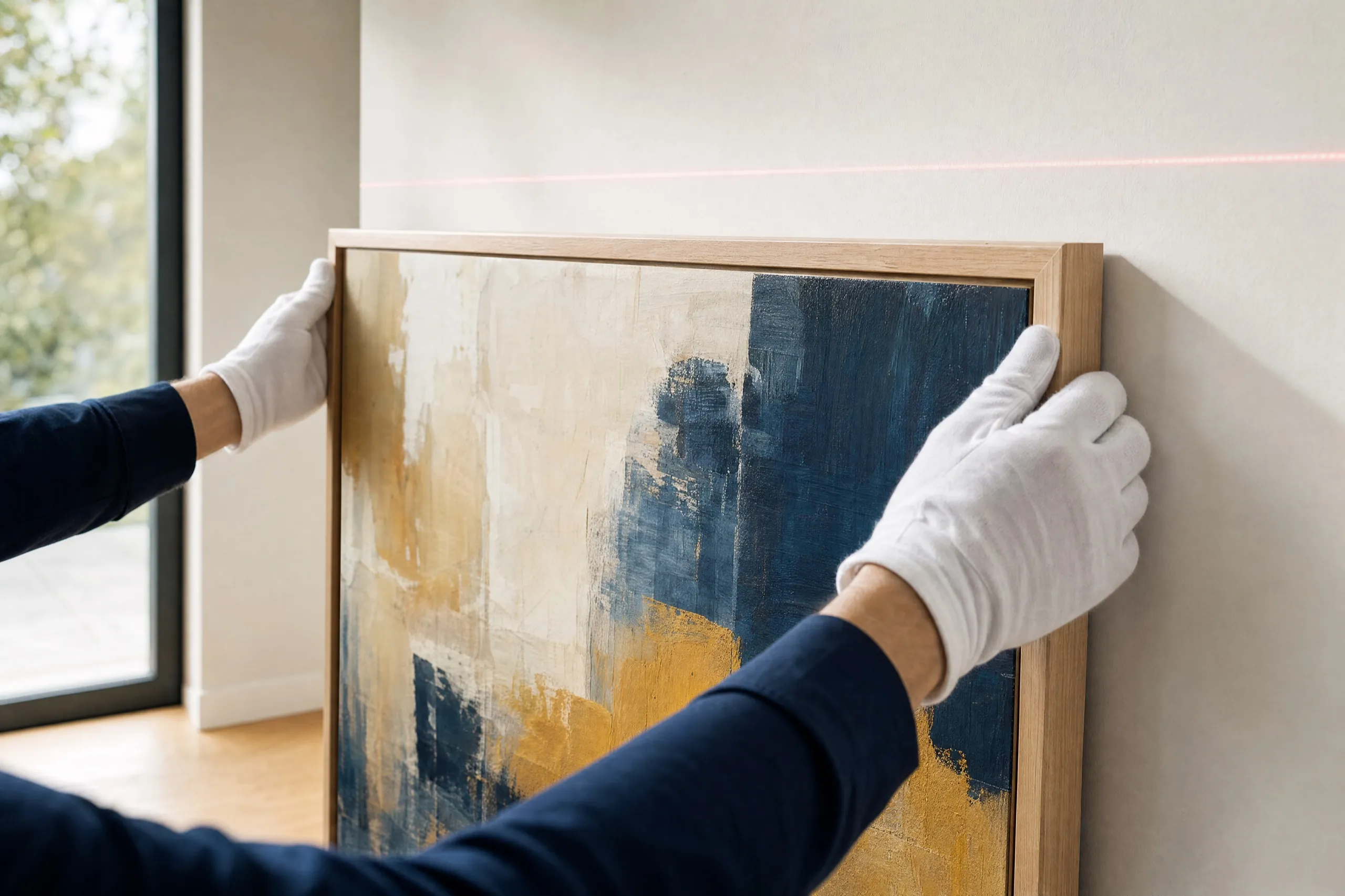
- Delivery and unpacking. Pieces are unpacked in the room they are going to, checked against the condition report, and staged by their wall or hung on the spot through our art installation service.
Art crating: soft-pack, travel frames and custom crates
Not every piece needs a crate, and crating everything costs time and money without adding protection. The right method depends on value, fragility, size and distance.
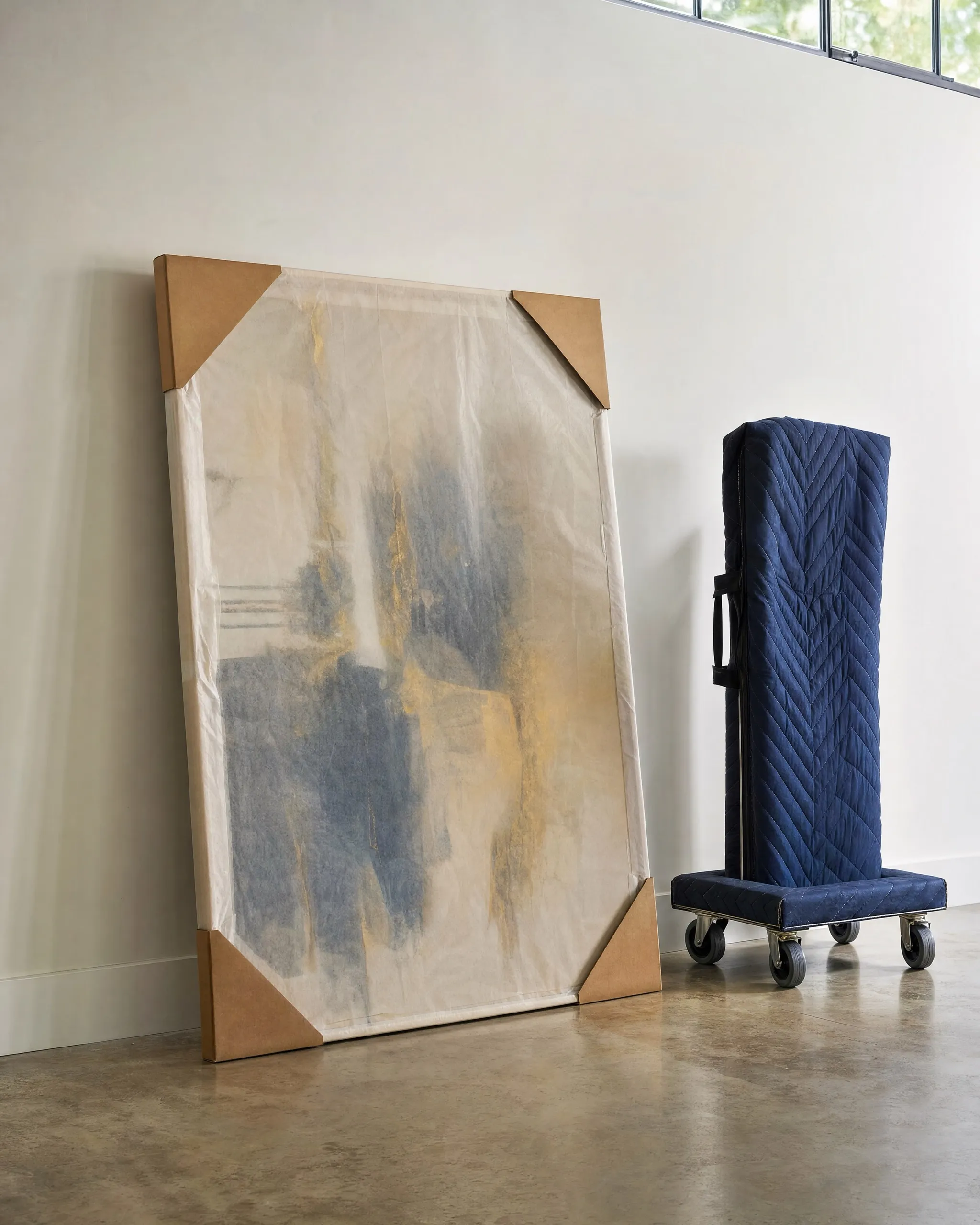
- Soft-pack. Right for most framed works moving locally: glassine against the surface, corner protectors, then foam and rigid board. Bubble wrap never touches a painted surface, because it can trap moisture and leave an impression in the paint.
- Travel frames. Large canvases and works with delicate or unglazed surfaces can be fixed into a lightweight travel frame, so nothing touches the front, then packed or crated around that frame.
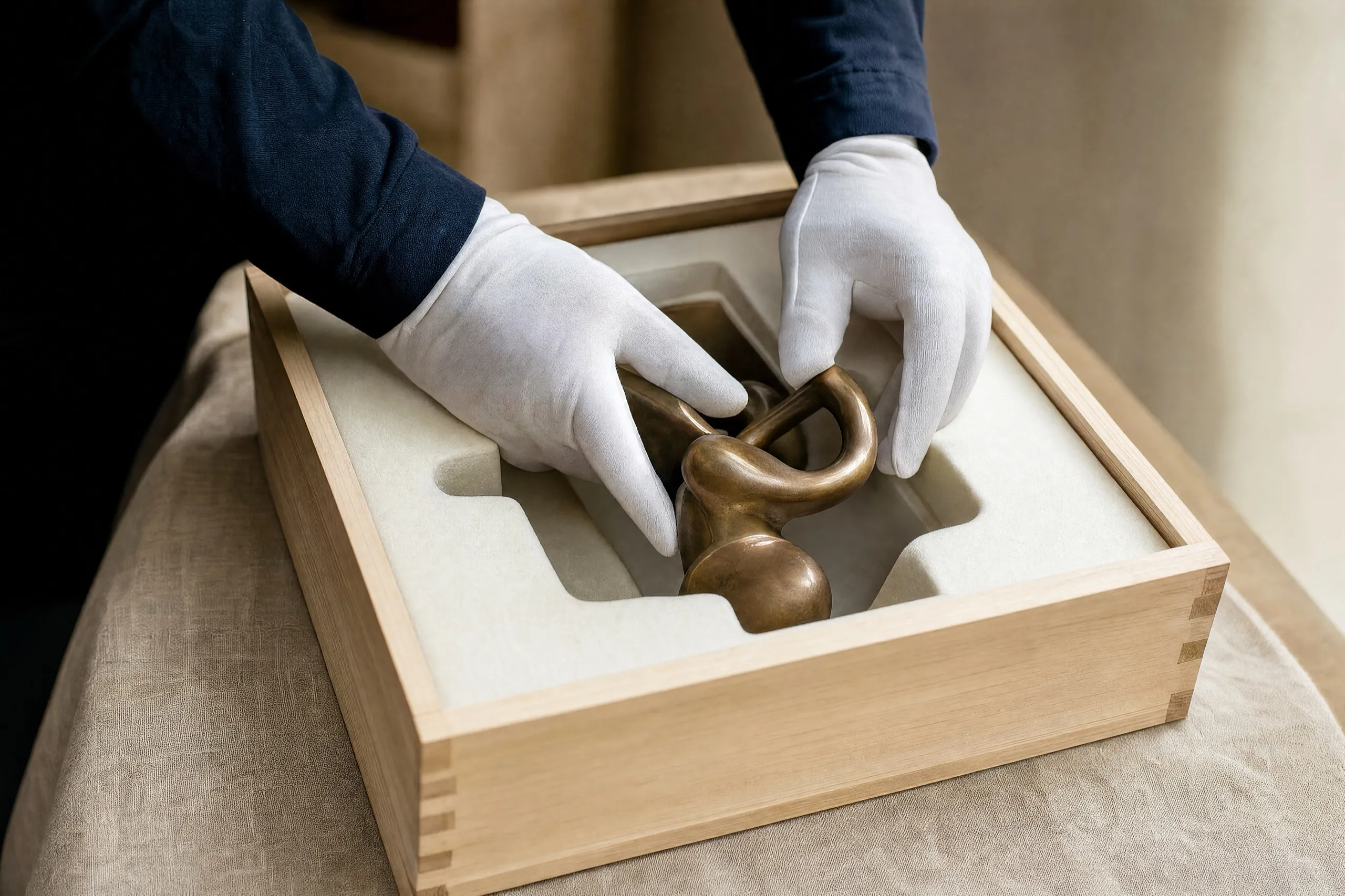
- Custom crates. Built to the dimensions of the piece for high-value and glazed works, long routes, and storage where a crate protects better than a rack. Paintings are cushioned at the edges with foam. Sculpture travels in foam-lined crates with cavities cut to its shape, so it cannot shift.
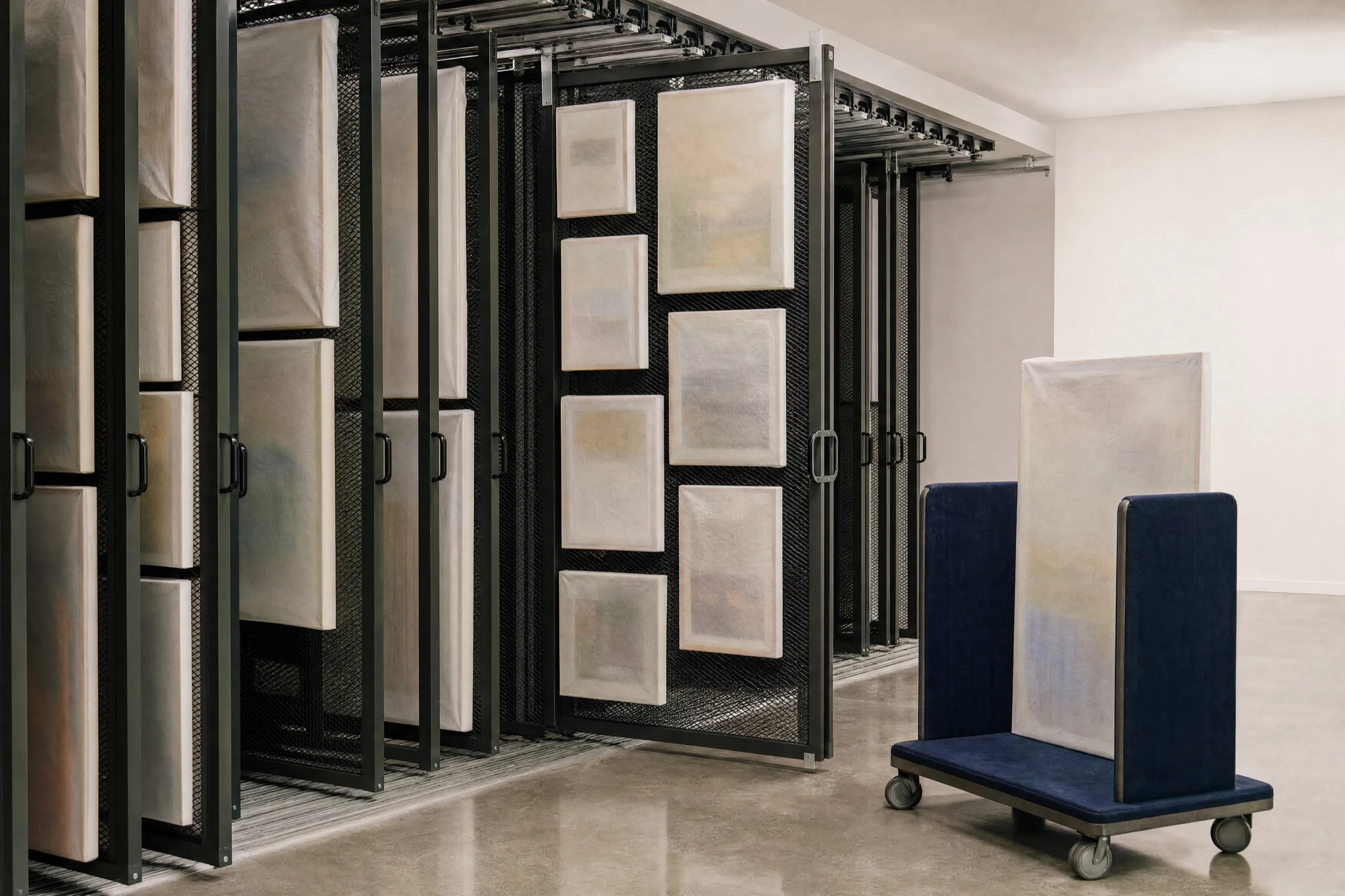
- Slat crates and A-frames. Open crates for heavy, sturdy objects, and A-frame carts that carry large paintings, mirrors and stone upright.
International fine art shipping is planned as its own project, with export paperwork, a customs broker and crates built for air or ocean freight. Solid wood crates must meet ISPM 15, the international standard for treated wood packaging, while plywood crates are exempt.
Antique movers for furniture, clocks and heirlooms
Antiques are fragile in ways that are not always visible. Old joints are often held with hide glue, veneers lift, and finishes such as French polish mark under heat and pressure. Good antique movers handle each piece by its construction, not its size.
- Marble and stone tops are removed, crated separately when they need it, and carried on edge.
- Drawers and doors are secured or removed, keys are bagged and labeled, and loose hardware is wrapped.
- Chairs and tables are lifted by their frames and aprons, never by arms, backs or tops.
- Tall case clocks have their pendulums and weights removed and packed on their own before the case moves.
- Mirrors with old silvering and gilded frames are soft-packed or crated so nothing presses on the surface.
Sculpture, stone, chandeliers and safes
Heavy or awkward objects need a plan for the route as much as for the object. At the walkthrough we note the weight, the doors and stairs on the way out, the floors it will cross and where the truck can stand.
- Sculpture. When a bronze, marble or ceramic piece needs a crate, it is built to the piece’s profile, and the weight and center of gravity decide how it is lifted and which way up it travels. Bases and plinths travel separately when they come apart. Outdoor pieces may need rigging or a crane, which is scoped at the walkthrough.
- Stone. Stone tabletops and slabs are carried on edge and supported along their length, never flat.
- Chandeliers. Crystals and drops are removed, wrapped and packed in labeled compartments so the fixture can be rebuilt as it was. An electrician disconnects and reconnects the fixture itself.
- Safes. The weight decides the equipment, and floors, stairs and thresholds are protected along the route. Safes always move empty.
Museum movers, galleries and auction house deliveries
Galleries, designers and institutions often bring in outside handlers for exhibition changes, deliveries to collectors and works going out on loan. That work runs on the venue’s rules: loading dock windows, receiving paperwork, often a certificate of insurance naming the venue, and a registrar or gallery staff member who checks each piece in. A move into or out of a gallery is planned around those rules and that schedule, with the condition reports ready at the dock.
Auction purchases have their own logistics. Auction houses typically release a lot only after payment and with a signed release naming the shipper, and many charge storage after a set number of days. We coordinate the release, collect the piece, compare it with the auction house’s condition notes, and deliver it into the home, into fine art storage, or to a framer or conservator first.
Valuation, insurance and paperwork for art in transit
California sets a household mover’s basic liability at 60 cents per pound per article. For art, that is close to nothing: under basic liability a 20-pound painting is covered for about $12, whatever it is worth. For a household move across state lines, federal rules require the mover to offer Full Value Protection, and the Released Value option, also 60 cents per pound per article, applies only if you choose it in writing. Before move day:
- List each high-value piece on the inventory with its value.
- Ask your fine art insurer whether the policy covers transit and storage, and whether it needs notice before the move.
- Get the higher valuation options available for your move in writing, and keep the condition reports with your collection records.
When the collection is one part of a larger household, with staff, several residences or a move timed around a renovation, estate moving plans the art alongside everything else in the house.