What does white glove moving mean?
White glove moving is a household move where the moving company takes on every task, from planning to unpacking, and handles each piece according to what it is and what it is worth. You do not pack, lift, measure doorways or unpack. The movers plan the move, protect the house, pack, crate, carry, place and clean up.
The term describes a level of service, not a regulated category. It does not appear in California’s MAX 4 tariff, the rulebook for household movers in the state, so two companies can use the same words for very different jobs. The useful question is not whether a mover calls itself white glove, but what its written estimate includes.
What does a white glove moving service include?
A full white glove move usually covers:
- A walkthrough of the home before any price is given.
- A written inventory and estimate, including a list of the pieces to be crated.
- Protection for both homes: floor runners, door jamb covers, banister wraps and elevator pads.
- Full packing with the right materials, such as wardrobe cartons, dish packs and acid-free paper.
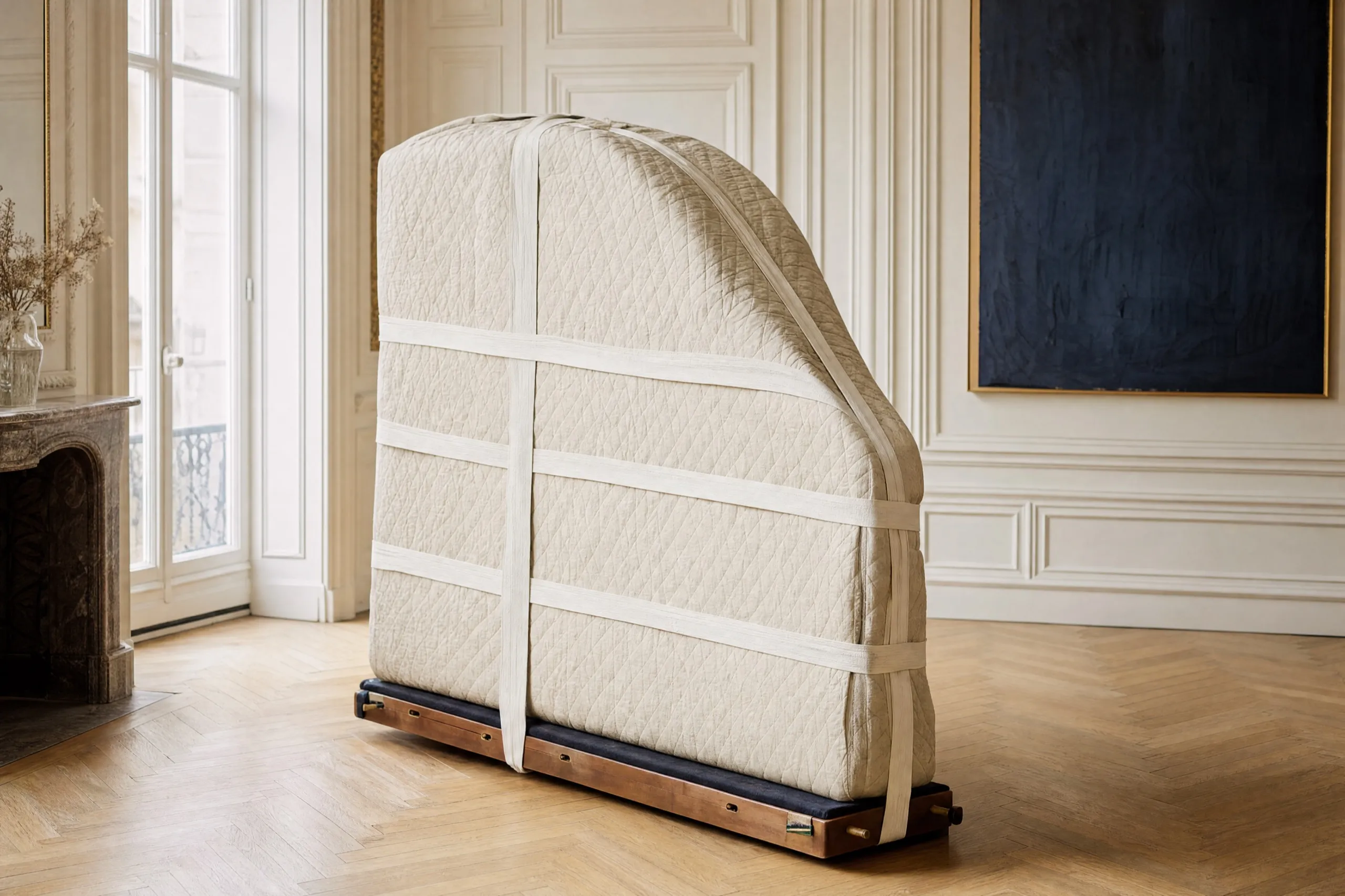
- Custom crating for art, mirrors, stone and glass tops, chandeliers and sculpture.
- Disassembly and reassembly of beds, tables and other large pieces.
- Placement to a floor plan, with rugs laid before furniture and art staged by its wall.
- Unpacking and debris removal, so no cartons, pads or paper stay behind.
- One written plan from the first walkthrough to the last placed piece.
Many companies add services on request. moveBuddha’s guide to white glove moving also lists home cleaning, electronics and home theater setup, hanging art and mirrors, and climate-controlled storage.
How does a white glove move work, step by step?
Most white glove moves follow the same sequence, whichever company runs them:
- Walkthrough. The mover sees the home, notes each piece that needs a crate or special handling, and checks access at both addresses: stairs, elevators, drives and gates.
- Written estimate and plan. In California the estimate must be in writing, and its Not to Exceed price is the most you can be charged unless you add items or services. The plan sets crews, trucks, dates and where each piece goes.
- Paperwork. Building certificates, elevator reservations, gate lists and any street parking signs are arranged before move day.
- Packing and crating. Packers work room by room, for a large home often a day or more ahead, and crates are built for the pieces that need them.
- Move day. Both homes are protected, furniture is wrapped and taken apart where needed, and everything is loaded against the inventory.
- Placement. Rugs go down first, furniture goes where the floor plan says, and beds and tables are reassembled.
- Unpacking and cleanup. Cartons are unpacked into the right rooms, and every box and pad leaves with the crew.
How is white glove different from full-service and standard movers?
The three terms describe tiers of the same work. Where the lines fall varies by company, so treat this table as a guide to what to ask for, not a rulebook.
| Standard movers | Full-service movers | White glove movers | |
|---|---|---|---|
| Packing | You pack | Movers pack, often at extra cost | Movers pack every room |
| Fragile and valuable pieces | Pads and stretch wrap | Pads, wrap and boxes | Custom crates built to size |
| Protection for the home | Basic | Floors and doorways | Floors, doorways, banisters and elevators at both homes |
| Furniture | Basic disassembly | Disassembly and reassembly | Reassembly and placement to a floor plan |
| Unpacking and debris removal | Not included | Sometimes, at extra cost | Included |
| Best for | Small moves, easy-to-replace furniture | Most households | Fine furniture, art, antiques, large homes and estates |
In short, a full-service move usually means the movers pack, load, drive and unload. A white glove move adds the planning before and the finish after: crates, protection, placement and unpacking, all on one written plan.
Is white glove delivery the same as white glove moving?
No, and search results often mix them up.
White glove delivery is a retail service. When you buy a sofa or a dining table, the store’s delivery partner brings it into the room you choose, unpacks it, assembles it and usually offers to take the packaging away. The furniture retailer Sixpenny, for example, describes its white glove delivery as bringing your shipment “into the room of your choice,” unpacking it and completing any assembly, for $100. Its free threshold delivery stops at the front door.
White glove moving relocates a whole household: every room and closet, the art on the walls and the piano in the living room, from one home to another.
The practical difference is scale. Delivery is one new item coming in. A move is everything you own going out and coming back in, with crating, storage and a floor plan at the other end. Within California, a company that moves your household goods needs a household mover permit from the Bureau of Household Goods and Services. A furniture store’s delivery team is not a substitute.
Who offers white glove moving services?
Four kinds of companies use the term:
- Local movers with a white glove tier, usually a dedicated crew within a larger moving company.
- Specialist luxury and estate movers, whose whole business is high-value homes.
- Fine art logistics firms, which crate, ship, store and install art but usually do not move whole households.
- Van lines and their local agents, mostly for long distance moves.
In Southern California, Elite Moving & Storage provides white glove moving for homes, estates and high-end collections, planned from a private walkthrough.
Whoever you consider, check four things:
- The permit. Every household mover in California needs a BHGS permit, shown as a CAL-T number. Check it with the BHGS license search.
- The inspection. In California, an estimate must follow a visual inspection, and the bureau’s moving tips recommend an in-person inspection rather than video or photos.
- The written scope. Crating, packing, unpacking, placement and storage should each appear on the estimate.
- Valuation. Get the coverage options and their prices in writing before move day.
How much does white glove moving cost?
moveBuddha’s national comparison puts white glove moving at $6,000 to $100,000 or more, against $2,000 to $10,000 or more for full-service movers.
For local moves within Southern California, typical white glove ranges are $3,500 to $7,500 for a condo or two-bedroom home, $7,500 to $18,000 for three to four bedrooms, and $18,000 to $60,000 or more for an estate. Crating, packing, access and valuation drive the number more than distance does. Our luxury moving cost guide for Los Angeles breaks it down, with add-ons, California estimate rules and tipping.
Is white glove moving worth it?
It is worth it when a mistake would cost more than the upgrade. That usually means one or more of these:
- Fine art, antiques, stone, glass or a piano that needs a crate or specialist handling.
- A large home or estate, where packing and unpacking would take days of your own time.
- Hard access, such as hillside drives, guard gates, high-rise elevators and building rules.
- A gap between homes, such as a renovation or a rebuild, where things go into storage and must come back to the right rooms.
Coverage is part of the math. Under California’s MAX 4 tariff, basic mover liability is 60 cents per pound per article, so a 100-pound marble console is worth $60 in a claim. Crating, careful handling and declaring a collection’s real value all cost money. So does replacing what basic coverage will not.
It may not be worth it if most of your furniture is easy to replace and the home is small and easy to reach. A standard or full-service move will do that job for less.
At the other end of the scale, households with staff, several residences or a large collection often need more than one crew and a plan that runs for weeks; that is estate moving. Pieces that need hanging or mounting after delivery belong to art installation, and anything waiting between homes can go into storage.